Translate

Sunday, April 16, 2017

Easter Meditation 2017 N.T.Wright

John August Swanson (artist)


Easter is the Great Celebration of the church, the climax of all of history, the turning point in which God vindicated Jesus and exalted him as Savior and Lord.  Today, we are so used to thinking about this even in personal terms only.  Certainly, as Mary at the tomb, Jesus comes and personally calls to us, our name, as he did Mary's.  Mary was released from the torment of demons and worked closely with Jesus and his disciples according to Luke's gospel.  She finds herself distraught at the tomb and in her grief Jesus comes and transforms that sorrow.  However, Jesus also calls her to something else; to go and tell his disciples that he is ascending and will empower them to spread the Good News of God's transforming love to the world.  The work of New Creation as begun, and this message is a message for churches, societies, nations, as well as individuals.  The above is an explanation of the meaning of Easter from NT Wright author of numerous works on Paul and the Gospels.  Below is a meditative video from Art and Faith focusing on the resurrection.  May we rejoice and celebrate this day God's work in our world.


Artwork of John August Swanson

Faith and Art Loyola Press

NT Wright Home Page

Saturday, April 15, 2017

Sermon: Good Friday; Death is never the last word


image Art in the Christian Tradition: Copyright © 2024 Jean and Alexander Heard Libraries, Vanderbilt University
used Creative Commons Attribution Non Commercial use

On Good Friday, the reality of death hit home to the disciples. Jesus was dead, and all their hopes and dreams had died also. 

Death comes as a shock, it robs us of the people we love.  Even for those of us that know life and death are related to each other, that it is intricately tied to the web of life, death still comes as a shock, the reality and sting of death doesn't take away the surprise and grief over the loss of the people in our lives. 

The same is true of Jesus and those that loved Jesus.  On Good Friday, and Easter morning, the reality of Jesus death began to dawn on them. 

Dead were the hands that healed the lepers,

Dead were the fingers that touched the eyes of the blind,

Dead was the lips that prayed thanksgiving over the fish and the loaves,

Dead was the heart that beat with compassion for the outcast, the immigrant, and the foreigner,

Dead was the mouth that had courageously declared that the poor in spirit, the meek, the brokenhearted, the peacemakers, those thirsting after justice, the pure in heart, the merciful would inherit the kin-dom of God,

Dead was the Jesus that went out to eat with tax collectors and sinners, 

Dead was the Jesus that reached out to the woman at the well rejected by her own, 

Dead was the Jesus that forgave sins, and told people to love their enemies, 

The Roman empire and the religious elite thought they had won, they had put down another insurrectionist, another radical rabbi threatening the status quo, when Jesus' body was taken down from the cross, they thought, ah good, we put an end to this nonsense. 

Until Easter...

On Easter morning, God had the last word. Death will never have the last word again. 

On Easter morning, God declared in the words of the Danish theologian, Karl Barth, the divine "Yes" of God. 

Humanity at its worst cannot put down the eternal unstoppable word of God; Jesus 

God's word demonstrated in power, God's word demonstrated in glory, God's word demonstrated in victory, God's word demonstrated in love, God's word demonstrated in the empty tomb. 

When Jesus loved ones arrived that day, Jesus wasn't in the tomb, 

Jesus had risen again from the dead. 

He wasn't finished. 

Jesus wasn't finished holding the hand of the leper, Jesus wasn't finished bringing healing to the heart sick, Jesus wasn't finished being a friend to the friendless, Jesus wasn't finished standing up to the powers of the world that would oppress and deny our humanity, Jesus wasn't finished modeling an inclusive community of faith, one based on equality, equity and the diversity of the human family. 

Jesus wasn't done breaking the chains of those held in bondage, Jesus wasn't finished clothing the naked, feeding the hungry, finding people that are at their ropes and and saying to them, here at the end of all things, 

“I love you, I will never leave you, I died to let the world know that you are my child.  You might be rejected by society, you might be rejected by people in your family, 

but you will never be rejected by me, I know because I made you who you are, and I love you just as you are, and I will not leave you alone, in fact, I am going ahead of you to the Galilee. I'm waiting for you there.”

Galilee, where Jesus turned water into wine, where Jesus proclaimed the reign of God, where Jesus healed the sick, and preached the good news to the poor, where Jesus calmed the raging sea. 

It is there, in the Galilee, that Jesus is waiting for us.  To welcome us into God's realm, and journey with us into the new world of God's new creation. 

This Easter, remember that the women were terrified and afraid, that they initially didn't say anything to anyone.  The ending of Mark is v8, and it is with this honest ending that we often find ourselves on Easter, along with the women.  But that is ok.  Jesus meets us where we are.  The important question, is whether we are willing to follow to Galilee.  

To continue Jesus mission.  There will be opposition.  There was for the early followers of Jesus, and there is today, often among others that claim the name of Christ.  This Easter, respond to Jesus call to follow, even though we may be quite fearful of where the journey make take us. 

Friday, April 14, 2017

Maundy Thursday or Holy Thursday in the Christian Tradition


Maundy Thursday comes from the Latin word meaning 'command', it is a service during Holy Week that commemorates Jesus time spent with his disciples celebrating the Passover meal.  It was during this meal that Jesus takes two important actions, first, he washed the feet of his disciples.  In doing this, Jesus not only set the example for the Christian life of service and humility but also specifically appoints the disciples to carry out his work and mission in his absence.  This priesthood of the apostles is different than the priesthood of all believers.  While all Christians are called to a life of service, leaders in particular embody this.  Secondly, Jesus gave his disciples the promise of his eternal presence when he broke bread and shared the cup representing his pending sacrifice.  Jesus demonstrates his priestly role as he prepares to offer himself as the ultimate sacrifice out of love.  When Christians celebrate Holy Thursday they also celebrate the Lord's Table, experiencing Christ's Presence in the breaking of the bread and the drinking of the cup and the Lord's mission of taking God's love to the world.


Sunday, April 2, 2017

Fifth Sunday in Lent Meditation


Resurrection of Lazarus 1912


Death threatens life in the story of the raising of Lazarus, and János Vaszary’s Resuscitation of Lazarus invites us into the scene. This 1912 painting is a striking collision of styles: the figures recall the standardized style of Byzantine icons, while the background, color, and expression have a modern, vivid quality. This is revered tradition unfolding in the here and now, much like the Gospel message seeks to imbue our present day.

Listen to this meditation for the Fifth Sunday of Lent from Arts and Faith on the Raising of Lazarus and Jesus powerful action on death.  This Sunday we are encouraged to have faith in Christ and look to our future with hope and life.  


Wednesday, March 29, 2017

Third Sunday in Lent Meditation


St Photini

Byzantine icons are portals to the divine presence. The depictions are heavenly—the gold backgrounds speak of divine truth. The serene, symmetrical faces invite us into the order of Heaven. Here is a peace that surpasses all understanding. We slow down before the icon and encounter the divine presence.

Listen to this audio meditation for the season of Lent and check out other videos at "Arts and Faith" a site of Loyola Press

Loyola Press

Wednesday, March 22, 2017

Second Sunday In Lent Meditation


Faith and Arts Site

In the Transfiguration, Raphael tells a story of revelation, faith, and healing. He shows how the moment of Revelation on Mount Tabor sheds light on the scene below, the healing of a boy with a demon. It’s the story in the Gospel immediately following the Transfiguration of Jesus. Heaven sheds its light below as Christ, embraced by the bright cloud and flanked by Moses and Elijah, is the apex of the scene. Below we see the apostles and even further down we see others gathered to view a possessed boy and his family. From top to bottom, the colors shift from a cool, heavenly glow to warmer, earthly tones.

Check out the video at the Faith and art site or below:


Tuesday, March 14, 2017

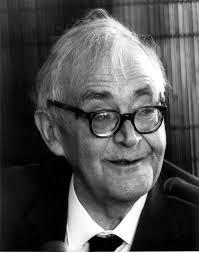
Recuerdos de Karl Barth : Dr. Juan Stam de Costa Rica


Algunos recuerdos de Karl Barth:
Dr. Juan Stam


El blog de Juan Stam se peurde acceder en el enlace debajo del articulo.  Juan Stam es profesor y teologo en Costa Rica, escribe sobra themas teologia y biblico in su sitio "Blog de Juan Stam"

Blog de Juan Stam

Cuando me presenté a Barth en 1961, y le dije que era de Costa Rica, Centroamérica, me dijo, "Ah revoluciones, verdad? Le expliqué que en Costa Rica hemos tenido un gobierno estable, a lo que respondió, "Ah volcanes y terremotos entonces, verdad?"

Le interesaban todos los países y estaba muy bien informado.  Era muy enemigo del regimen de Francisco Franco.   Mis recuerdos son mayormente del coloquio inglés de Barth donde dialogada con los estudiantes extranjeras (unos cien; tenia coloquios también en alma y francés).  Una vez un alumno comenzó su pregunta con, "Usted, como el teólogo mas grand del siglo XX, que pinta de..." Barth le respondió, "No hay teólogos grandes.  Al pie de la cruz, todos somos párvulos" (en parte estaba citando a un autor de otro tiempo).

Barth tenía un maravilloso sentido de humor. En un coloquio donde conversábamos sobre la creación, un profesor norteamericano (según recuerdo) hizo una pregunta algo larga sobre los dinosaurios. Barth respondió que no tenían nada que ver con el tema bíblico y la teología de la creación. El norteamericano cuestionó la respuesta de Barth, como manera errada de relacionar ciencia y fe, y más adelante en el conversatorio, volvió a insistir en el tema de los dinosaurios. Evidentemente molesto, Barth exclamó, "¿Qué están haciendo todos estos dinosaurios en nuestra aula de teología? Me los saquen ya; llévenlos al zoológico donde deben estar".

Me tocó dirigir el coloquio y escogió un pasaje de la Dogmática que juntaban dos problemas gruesos, la predestinación y el juicio final. Hice un esfuerzo tremendo y Barth elogió el trabajo, aun dijo que no tenía respuestas para todos mis argumentos, pero me dijo que tenía una pregunta para comenzar. Me había basado fuertemente en San Juan 5:28-29, que los muertos saldrán de sus sepulcros a resurrección de vida o de condenación, pero no me había fijado bien en todo el texto, que dice "los que hicieron lo bueno" y "lo que hicieron lo malo". Barth me preguntó con simpática malicia, "Dígame, señor Stam, ¿Usted ha hecho lo bueno?"

¡Me agarró fuera de base! Si digo que no, cae mi argumento o pierdo la salvación; si digo que sí, soy un fariseo soberbio y la salvación sería por obras. "Yo no", le contesté, "pero Cristo por mí". "Y sólo por usted", "No, por todos los que han puesto su fe en él". "Entonces", replicó él, "¿no sería salvación por las obras?" Al final de la sesión, se acercó un alumno y le dijo "Ay, profesor, qué complicado esto, me duele la cabeza". Estuve sentado al lado de Barth, ví que señaló al estudiante con su dedo y le dijo, "Usted ha quitado sus ojos de Cristo. Cuando fijamos la mirada él, toda la teología es gozo porque es reflexión sobre la gracia de Dios". ¡Seguramente ese colega se lamentó de haber hecho ese comentario!

Una mañana estuve en la casa de Barth, y ese día Cullmann, desde el Concilio Vaticano en Roma, en vez de analizar el proceso conciliar envió a la prensa un fuerte ataque contra Bultmann. Le pregunté a Barth cómo le parecía ese artículo y respondió: "Yo también discrepo con Bultmann y he escrito contra su teología, pero Cullmann siempre tiene a Bultmann frente a sus ojos. Yo prefiero ver a Bultmann por un espejo retrovisor, y fijar mi mirada en Cristo".

Barth tenía una humildad muy propia de su condición. Cuando él disputaba con Agustín, Aquino, Lutero o Calvino, uno sentía que estaba presenciando un diálogo entre iguales. Pero a la vez no tenía pena en decir que no sabía algo o de pedir información. Más de una vez, preguntaba a los estudiantes alemanes, "¿Qué dice von Rad de eso?", etc. Recuerdo otra ocasión cuando estábamos enfrascados en un pasaje complicado, y Barth preguntó, "¿Cómo tradujo Bromiley eso al inglés?" Es mucha humildad que un autor famoso tome en cuenta su traductor como criterio de interpretación de su propio escrito.

Recuerdo con gratitud otra bella experiencia con Barth. En febrero de 1964 me tocaban los exámenes orales del doctorado con Reicke, Barth y Cullmann. A una serie de estudiantes estadounidenses les había ido mal y había mucho pánico. Unos días antes de la fecha de mis exámenes Barth me dijo, "Herr Stam, yo no voy a hacerte una cantidad de preguntas. para encontrar lo que tu no sabes; te voy a poner un tema y dejarte hablar, para que puedas mostrar lo que sí sabes". Eso me dio mucha tranquilidad y confianza y me fue super-bien la experiencia.

Cuando regresé a nuestro Seminario en Costa Rica y me pidieron una charla sobre Barth, resumí mi impresión de su persona con tres palabras latinas: humanitas, humilitas, e hilaritas. Eso fue Karl Barth.

La personalidad de Barth era tan rica y creativa, se ha convertido en leyenda y sujeto de innumerables anécdotas apócrifos. Las historias, incluso éstas, crecen a ir contándose. Pero lo que cuento ahora son recuerdos que creo que son fieles. Sobre todo, son fieles a la personalidad del maestro.

(ver comentarios sobre Cullmann para más en cuanto a Barth)


[Barth: el ser humano en es único animal que se ríe, y que fuma]