Translate

Thursday, July 7, 2022

PC(USA) Declared Sanctuary Church


With almost all of its items having been approved via consent agenda, the General Assembly’s Immigration Committee put much of its energy Tuesday night toward IMM-06, leading the way for the Presbyterian Church (U.S.A.) to declare itself a “Sanctuary and Accompaniment Church.”

The Assembly approved the slightly amended item 340 to 25 after a presentation by the committee and a few concerns raised about what effect IMM-06 would have on individual churches.  

Amanda Craft, manager of advocacy in the Office of Immigration Issues in the Office of the General Assembly, stressed that IMM-06 is not intended to force churches to provide sanctuary in the sense of accepting immigrants into a physical space, which is something that requires “a lot of discernment,” she said. 


IMM-06 is about affirming “decades and decades of policy that the PC(USA) has valued and spoken to” and “encouraging congregations to use this opportunity to discern” what accompaniment or sanctuary would look like for them, Craft said. 


She explained that the sanctuary movement has evolved since the 1980s, when there were large numbers of immigrants arriving from Central America seeking asylum to escape torture and death squads. Today, physical refuge is still important, but the new movement also includes accompanying people to appointments, helping them secure legal counsel, fighting for access to driver’s licenses, and working to amplify the voices of immigrants to raise public awareness of the harmful effects of immigration enforcement policies.  


Expressing particular concern for Black and brown immigrants, Commissioner Kymberlaine Banks, a ruling elder from Grace Presbytery, said, “It is incredibly important to stand with and for them against all efforts by anyone to separate families. We must declare ourselves and our church to be a Sanctuary and Accompaniment Church.” 


Commissioner Janalee Kosowski, a ruling elder from the Presbytery of East Iowa, was skeptical about IMM-06, though. She began by clarifying concerns that had been raised during committee, insisting that they were not about protecting “the white people back home” as some had thought. Rather, there was concern about a lack of clarity about what the PC(USA)’s declaration would mean at the congregational level as well as concern about wording that encourages church entities to “resist efforts by the government to separate families,” she said. 


“People I know are in their 70s and 80s and were brought up very much by, you know, my country right or wrong, and so the idea of combating (or) resisting — I mean, get your gun? What? — the government as opposed to opposing these policies,” she said. “I’m just trying to ask questions and understand exactly what this means.” 


Amanda Craft, an assistant stated clerk who serves as manager of advocacy in the Office of Immigration Issues.


Kymberlaine Banks, commissioner from Grace Presbytery in Texas.


She also noted that her congregation has people from all over the world and that people shouldn’t assume there’s a lack of heart for the work. “We know how to help refugees.” 

But ultimately, the vote favored the side of Commissioner Charles Weathers, a ruling elder from Trinity Presbytery, who had urged the church to take a strong stance. 


“I stand in favor of this overture,” he said. “Someone mentioned the word ‘bold’ a little while ago. And if we’re going to be anything, it is time to be bold. And if we're going to be called anything, I think it’s acceptable to be called a place of sanctuary and accompaniment. … We’re in a space now where we see daily the other-izing and the ostracizing and the demonizing of others in so many different ways, and … I highly encourage us to take this opportunity to stand with boldness and courage for our siblings in Christ across the world.” 


A section was amended to say, in part, that the Office of General Assembly stands ready to assist “its councils” (rather than congregations) with discerning their calls on this issue and to inform them of their legal risks.  


Items from the Immigration Committee that passed via consent agenda included: 


IMM-03: “A Resolution to Establish a Network of Immigration Lawyers.” It urges Presbyterian attorneys, paralegals and some others to get trained in asylum law. 

IMM-08: “Regarding the Treatment of Refugees.” It involves educating the whole church about conditions that precipitate migration, about obstacles to the care of refugees, and about detention and deportation practices. 

IMM-09: “A Resolution Supporting Immigration/Refugee Justice Work in the PC(USA).” It encourages continued collaboration between the Presbyterian Mission Agency and the Office of General Assembly to maintain and strengthen the work of the church as well as partners. 

In addition to hearing immigration matters, the Assembly also took up a handful of Polity Committee items that had carried over from the previous plenary. Most of the items were disapproved. 

POL-04: “On Amending G-2.1002 Regarding Ordaining a Commissioned Ruling Elder as Minister of the Word and Sacrament.” (Disapproved with comment, looking toward the establishment of a task force.) 

POL-08: “On Amending G-2.0301 to Allow Congregations to Elect Members as Ruling Elders for Service to the Larger Church.” (Disapproved) 

POL-12: “On Amending G-2.0504 Regarding Parish Associates, seeking to restore the office to the Book of Order.” (Disapproved) 

POL-07: “On Amending G-2.0503 to Change the Designation Honorably Retired to Retired.” (Approved) 

POL-09: “On Amending G-6.04e Regarding Two-Thirds Affirmative Vote to Amend the Book of Order.” (Disapproved)

The PC(U.S.A.) stands in solidarity with immigrants, migrants, and asylum seekers affirming that our collective flourishing depends on the safety and security of everyone, including those newly arriving on our shores. 

PCUSA Declared Sanctuary Church

This work is licensed under a Creative Commons Attribution-NonCommercial-NoDeratives 4.0 International License.


Monday, June 20, 2022

Anti-Asian American and Pacific Islands (AAPI) Hate and Violence Overture


This year, Presbyterians will again meet in our General Assembly to do the work of the church.  This year, our Presbytery is sending a few commissioners, below are a list of the delegates and their responsibilities:

Here is our complete list of commissioners and advisory delegates and their committee responsibilities:

  • Erika Rembert Smith: Addressing Violence in the USA (Moderator); (June 22-26).  Erika is also on the Business Referrals committee.
  • Cris Heceta: Mid-Councils (June 20-23)
  • Jody Mask: Immigration (June 26-30)
  • Juan Montanez: Moving Forward/Vision 2020 Committee (June 29 – July 3)
  • Samira St. Clair-Husbands: Standing Rules of the General Assembly (June 26-30) 
(Information provided by the Central Florida Presbytery)

Presbyterians meet to consider important work that the church undertakes, as part of that work overtures are adopted, motions passed, and important actions are funded.  One of those areas is advocating for issues in our society such as hate and violence towards Asian-Americans and Pacific Islands Americans.  (AAPI).  According to the FBI, a shocking 73% increase in hate crimes was reported against Asian Americans, an incredible disproportionate increase.  What is even more troubling, is that given that these number relies on law enforcement agencies reporting these accurately to the FBI, and hate crime reporting is not mandatory, these numbers may be higher (Sakshi Venkatramn: NBC news)


The following is an overture that will be placed before the assembly regarding efforts to respond to AAPI hate by the church.  This is undertaken in the spirit of loving our neighbor and turning the tide against hate crimes, as scripture tells us, “You shall love the Lord your God with all your heart, and with all your soul, and with all your mind.” “You shall love your neighbor as yourself.”

General Assembly 225 
Commissioner Resolution on Anti-Asian American and Pacific Islander (AAPI) Hate/Violence
June 17, 2022

Resolution

That the 225th General Assembly (2022) of the Presbyterian Church (U.S.A.):

Condemn and denounce all acts of violence and hate against Asian Americans and Pacific Islanders (AAPI), and especially against the AAPI elderly.

Condemn the Presbyterian Church (USA)’s inability or unwillingness to lead on addressing anti-AAPI racism that has perpetuated attitudes and perspectives leading to the unequal, unjust and ungodly treatment and murders of racialized minorities, including the AAPI communities.

Commit to tearing down the idols of nationalism, misogyny, and xenophobia in the church through race- and gender-conscious discipleship [1] that includes, but is not limited to, education on the diversity of the AAPI communities, AAPI issues, anti-AAPI bias, the fetishizing of AAPI women, and AAPI histories of oppression and resistance, including U.S. colonialism and militarism across Asia and the Pacific.

Commend the Stated Clerk for his statement, “We See You Among Us” (March 2021), expressing the Presbyterian Church (USA)’s solidarity with its Asian siblings and standing against anti-Asian hate.

Commend the Presbyterian Mission Agency and its Office of Public Witness for its statement decrying racism against Asian Americans and calling for acts of hate against them to stop (March 2021). 

Direct the Presbyterian Mission Agency and the Office of Public Witness to support the work of the White House Initiative on Asian Americans, Native Hawaiians, and Pacific Islanders which is driving a whole-of-government agenda to advance equity, justice and opportunity for these communities. 

Direct the 225th General Assembly (2022) to ask that the U.S. Department of Justice fully implement the COVID-19 Hate Crimes Act and demand that all federal agencies review and revise policies that define hate crimes in ways that better account for acts of racism as seen in Atlanta, Buffalo, El Paso, etc. and support legislation aimed at protecting those who are being targeted by acts of hate and domestic terror.

Direct the Office of General Assembly and the Presbyterian Mission Agency to affirm the work and statements of other denominations, including the National Council of Churches, the United Methodist Church, the Episcopal Church, the United Church of Christ, the American Baptist Church, and other faith-based organizations.

Call upon the Racial Equity Advocacy Committee and other advisory committees, as appropriate, to monitor and track the actions at all levels of the Presbyterian Church (USA) which will enact and implement the actions called for in this resolution and provide a report to the 226th General Assembly (2024).

Call upon its congregations and mid-councils to actively combat anti-AAPI racism by preaching and teaching against such racism.

Call upon its members, congregations and mid-councils to invite, empower, and hire AAPI ministry leaders who understand the complexities of U.S. racism to speak into the ways they can respond to anti-AAPI racism, misogyny, and Christian nationalism in holistic and long-term ways; listen to AAPI stories of discrimination, marginalization, racism, and racialization, in larger U.S. society and in the church; and include AAPIs in initiatives that impact communities of color.

Encourage its members, congregations and mid-councils to seek to understand the ways that the “model minority” myth pits the AAPI community against other communities of color in ways that discourage solidarity among them, perpetuates the false notion that racial inequities and barriers can be overcome at the individual rather than systemic level, and discounts the harm that the AAPI communities face and minimizes the needs of the AAPI communities when they emerge. 

Encourage its members, congregations and mid-councils to seek to understand the ways the “perpetual foreigner” stereotype casts Asian Americans as a racial problem and as a “perilous other” in ways that led to insidious racial microaggressions and brazen forms of anti-Asian violence.

Encourage its members, congregations and mid-councils to stand in solidarity with the AAPI communities by:

    • Advocating that their state governments invest in combating anti-AAPI hate and violence as well as addressing racial inequities that continue to harm AAPI communities.

    • Advocating that their state and local governments require all public schools and agencies to provide culturally-competent mental health services and resources for AAPI youth and their families. 

    • Advocating that their state governments require their public schools to include education about Asian American studies, such as the Teaching Equitable Asian American Community History (TEAACH) Act enacted by the State of Illinois.

    • Advocating that their state governments institute public education programs and initiatives to combat harassment and violence against AAPI women and other vulnerable populations in public spaces, including streets and public transit, such as bills proposed in California [2].

    • Supporting AAPI businesses and enterprises that are disproportionately and negatively impacted by COVID-19 as well as AAPIs in the workplace who are unfairly targeted and discriminated against.

    • Support the work of Stop AAPI Hate, the Asian American Christian Collaborative, and other AAPI organizations who seek to empower and equip individuals, organizations and churches for faithful action to address anti-AAPI racism. 

Rationale

Beloved Community, the gospel is clear and the words of Jesus Christ are unambiguous: “You shall love the Lord your God with all your heart, and with all your soul, and with all your mind.” “You shall love your neighbor as yourself.” These words are fully and firmly grounded in the belief that all people are made in the image of God (Gen. 1:27), are deserving of love and respect, and therefore our faith compels us to support the flourishing of every human being, paying particular attention to those who are marginalized, oppressed, and suffering (Ex. 22:22; Is. 1:17; Ps. 82:3). 

This means actively seeking to ensure that all, including the Asian American Pacific Islander (AAPI) communities, thrive. We must commit in earnest to actively dismantle generational and systemic prejudice, suspicion, and hatred of the AAPI communities. Although we are speaking in the present, seeking a new future, these issues are profoundly evident in our past. 

“In recent years, there has been a resurgence of racially motivated violence directed against Asians in the United States…An alarming number of cases of racially motivated muggings, beatings, armed assault, shootings, verbal abuse, and vandalism have been reported..”

These words came from a resolution on Racially Motivated Violence Against Asians in America, which was adopted by the 197th General Assembly in 1985, following the vicious murder of Vincent Chin, a Detroit Chinese American. Two white auto workers thought Chin was Japanese, and while blaming him for the success of the Japanese auto industry the two white men, using racial slurs, began beating him with a baseball bat. Chin died of his injuries days later. The two assailants pleaded guilty to manslaughter, were ordered to pay $3000, and served three years probation with no jail time. In response to criticism the white judge who sentenced the killers wrote “These weren’t the kind of men you send to jail… You don’t make the punishment fit the crime; you make the punishment fit the criminal.” [3]

Twenty-six years later, a 21 year-old white male massacred eight people, six of whom were Asian women in Atlanta, on March 16, 2021. In the wake of the Atlanta massacre, many issued statements condemning this hateful action, mourning the loss of life and expressing outrage over the violence. Despite the shooter having been reported to yell, “I’m going to kill all the Asians!” and to place the blame for killing people on his “sex addiction,” the white captain of the sheriff’s department paraphrased what the killer told investigators about his motives, saying "he was pretty much fed up and kind of at the end of his rope, and I guess it was a really bad day for him and this is what he did." [4] The shooter was a professing Christian. He was reported to love “guns and God,” an alliance often documented to be associated with Christian nationalism. 

The Atlanta massacre was a link in a long chain of hate and violence experienced by those of Asian descent in the United States. Historically, Asian people have been tagged as the so-called “Yellow Peril”. Communities of Chinese settlers were frequently scapegoated for a variety of ills and burned down. [5] The Chinese were the first group to be excluded from immigration to the US on the basis of ethnicity and race in 1882 by the passing of the Chinese Exclusion Act, which was not repealed until 1943. Filipino American laborers were discriminated against and violently attacked during the 1920s and 1930s. 120,000 persons of Japanese descent, including American citizens, were unjustly incarcerated during World War II, many of whom lost homes, businesses, and farms as a result. Asian Americans were demonized as the enemy, regardless of their ethnic origin, during the wars in Korea and Vietnam, Cambodia and Laos. South Asian Americans of diverse ethnicities (including but not limited to India, Pakistan, and Bangladesh), suffered violence and discrimination alongside Middle Eastern Americans after 9/11. 

Asian Americans have also been stigmatized as perpetual foreigners and outsiders, treated with interpersonal racist violence and systemic anti-immigrant policies. Asian women in America are particularly targeted through racialization and sexualization, which in turn has led to their mass objectification, exoticization, and fetishization. 

From March 19, 2020 to December 31, 2021, a total of 10,905 hate incidents against Asian American and Pacific Islander (AAPI) persons were reported to Stop AAPI Hate, a coalition which tracks and responds to incidents of hate, violence, harassment, discrimination, shunning, and child bullying against Asian Americans and Pacific Islanders in the United States. From 2020, reported hate incidents increased by 339 percent in 2021. According to the Asian American Christian Collaborative, harmful tropes of “yellow peril” continue to be perpetuated by the news, with portrayals of Asians, Asian food, and Asian customs as unsafe and unwelcome. Early in the pandemic, the COVID-19 virus was characterized as the “Chinese Virus”, which stoked fear and discrimination and violence against Asian Americans. Many Asian Americans have been told to ”go back to where they came from.” Asians have been spit on, coughed at, shoved, and stabbed. Youth have been bullied, being called “Covid” or “Coronavirus,” and the elderly have been killed. 

In response to the surge of anti-Asian hate incidents, numerous organizations, including the Presbyterian Church (USA), have issued statements of solidarity with Asians and Asian Americans. The Stated Clerk, Rev. Dr. J. Herbert Nelson, issued a statement in March 2021, “we see you among us, and our spirits and our prayers are with you… Just as the PC(USA) stands against every other form of hate and stands for God’s love and justice shown to us by Jesus Christ, we also stand against hatred toward those of Asian descent.” The Presbyterian Mission Agency through its Office of Public Witness, also issued a statement in March 2021 decrying anti-Asian racism and offering specific actions to stop hateful actions against Asian Americans. 

Asian American clergy and elders within our own denomination have spoken to their lived experience, and called for solidarity. The Rev. Byeong-Ho Choi, Moderator of the National Caucus of Korean Presbyterian Churches (NCKPC), said of the Atlanta attacks, “This is a hate crime. Racial discrimination is heavily embedded in our country and society.” At the same time, Choi called for a reconciliation and unity rather than building hate for one another, and for the church to be the place of hope, healing, forgiveness and love.

Asian American moderators and vice-moderators of previous General Assemblies spoke in March 2021 [6], “Our AAPI forbearers have endured, have suffered, and have been made to bear countless incidents of micro- and macro- aggressions every single day, the caricaturing and stereotyping of being “model minorities,” of “exotic Orientalism,” of derogatory names, of being silenced, or assuming that our silent reflections and thoughtful meditations are somehow indications of acceptance or complacency. We ask you to listen to the stories of our AAPI siblings. Don’t speak, don’t explain, don’t theologize. Just listen. Receive our voices, hear us, hear our stories, hear our struggles.” 

Following the Atlanta massacre, the U.S. Congress passed the Covid-19 Hate Crimes Act, which aims to make the reporting of hate crimes more accessible at the local and state levels by boosting public outreach and ensuring reporting resources are available online in multiple languages. 

Also, President Biden signed Executive Order 14031, "Advancing Equity, Justice, and Opportunity for Asian Americans, Native Hawaiians, and Pacific Islanders" to establish the White House Initiative on Asian Americans, Native Hawaiians, and Pacific Islanders (WHIAANHPI) [7], which is working across government to advance equity, justice, and opportunity for AA and NHPI communities. Both the Covid-19 Hate Crimes Act and the WHIAANHPI deserve the support of the Presbyterian Church (USA).

Yet, more needs to be done. Understanding the Asian Americans and Pacific Islanders (AAPI) community’s challenges, hardships, and achievements is the first step in addressing this ongoing hate. Public education, school boards, and legislatures can play a big role in this effort by incorporating Asian American studies into the public school curriculum. In 2021, Illinois passed the Teaching Equitable Asian American Community History (TEAACH) Act, the first state law in the U.S. requiring public schools to include a unit dedicated to Asian American history. More states need to pass such laws.

In California, the State government approved in 2021 an Asian and Pacific Islander Equity Budget to invest in responding to anti-AAPI hate and violence as well as addressing racial inequities that continue to harm AAPI communities in California. Bills were introduced in 2022 to address harassment and violence against women and vulnerable groups in public spaces. One bill seeks to protect women and vulnerable groups from harassment on public transit. Another bill would require the state’s public health department to run a multiyear campaign about street harassment. Such bills must be passed, and more states should pass legislation to address the specific circumstances which cause anti-Asian hate incidents. 

What can individual members, congregations and mid councils do to dismantle hate and violence against the AAPI Community? Here are suggested actions from the Office of Public Witness:

Be an ally in the fight against AAPI racism.

Include AAPIs when discussing racial injustice.

Advocate for law enforcement to create task forces and liaisons to address concerns emanating from the AAPI communities.

Foster increased engagement between African Americans and Asian Americans and challenge attempts to generate conflict between them.

Challenge AAPI stereotypes, including the “model minority” myth, that downplay the issues confronting that community. Asians are often touted as possessing greater intelligence and success, especially compared to other racial-ethnic communities, while downplaying important problems the community faces.

Write letters of outrage to politicians who make anti-AAPI statements or express prejudicial sentiments. Write op-eds and letters to the editor in local papers.

When an incident occurs in your community, publicly advocate for prosecutors to charge hate crimes in violent attacks against Asian Americans and Pacific Islanders.

Attend rallies and protests in support of the AAPI community, and advocate for investment in education and community resources to get at the root causes of anti-AAPI xenophobia in the ongoing conversation on race.

Supporting the flourishing of every human being means protecting all marginalized groups from violence and hate, and promoting education and understanding of not only the AAPI experience, but also the history and experience of African American, Indigenous and First Nation Peoples, Latinx, and other racial ethnic groups, as well as the LGBTQIA+ community. Any statement of support for one marginalized group does not ignore, nor should it take away from the support of another marginalized group. 

https://religionnews.com/2021/03/17/the-atlanta-massacre-is-yet-another-sign -we desperately-need-race-conscious-discipleship/

https://thehill.com/homenews/state-watch/594751-california-state-lawmakers-unveil-bills-to-combat-violence-harassment-in/

Zia, Helen (May 18, 2001). Asian American Dreams: The Emergence of an American People. Farrar, Straus and Giroux. pp. 60. ISBN 978-0-374-52736-5. Retrieved June 16, 2022. 

https://www.rev.com/blog/transcripts/atlanta-police-press-conference-on-spa-shootings-transcript-march-17

https://www.sfgate.com/sfhistory/article/antioch-race-riot-chinatown-arson-california-16067820.php

https://breyeschow.medium.com/aapi-pcusa-moderators-fb57deb6d148

https://www.hhs.gov/about/whiaanhpi/about-us/index.html


Sunday, June 19, 2022

The Truth Will Set You Free- Rev. Erika Rembert Smith, Pastor Washington Shores Presbyterian Church


image Art in the Christian Tradition: Copyright © 2024 Jean and Alexander Heard Libraries, Vanderbilt University
used Creative Commons Attribution Non Commercial use

We all want to be free. The desire to be free motivated the founding fathers of the United States of America to write the Declaration of Independence declaring citizens of this country to be free from British control.  Eventually a national holiday was instituted, and a national anthem was created coining America “the land of the free and the home of the brave” for some, but not all. While the document signed in 1776 states that “all men are created equal,” eighty-nine years would pass before people of African descent would experience freedom from the confines and control of slavery. On June 19, 1865, residents of Galveston, Texas finally learned that slavery had been abolished two years earlier. Upon hearing the news, former slaves immediately began to celebrate with prayer, feasting, song, and dance. As it was then, so it is now, June 19th, also known as Juneteenth and Freedom Day, is a day of celebration and commemoration of the emancipation of enslaved African-Americans.

 
We all want to be free. There are youth who desire to be free from their parents’ control; employees who desire to be free from controlling employers; people who desire to be free from nagging thoughts that just won’t leave them alone. People of Color desire to be free from the realities of racism. Women desire to be free from the effects of sexism. Same gender loving people want to be free from the discrimination as a result of homophobia. Every day, citizens want to be free from the violence we’ve witnessed through recent mass shootings at the medical center in Tulsa, Oklahoma, and the school in Uvalde, Texas, and the Taiwanese Church nested at Geneva Presbyterian Church in Southern, CA, and the grocery store in Buffalo, NY; incidents that will no doubt happen again and again and again, until measures are put in place and laws are passed to help ensure the safety of those who live in this land.
 
We all want to be free. Free to go to church, the grocery store, the movies, the doctor’s office, to school, without the fear of losing our lives. Free to enjoy our lives, our families and the gifts God so graciously gives us in peace. In his speech, “I Have a Dream,” the Rev. Dr. Martin Luther King, Jr. spoke of the desire for freedom. He said, “when we let freedom ring, we will be able to cry, “Free at last, free at last; thank God Almighty, we are free at last.”
 
Jesus lived and died to set us free. He came that we might be freed from the bondage and the consequences of sin. In John 8, Jesus said to those who believed in Him, “If you continue in my word, you are truly my disciples, and you will know the truth, and the truth will make you free (John 8:31-32).” Learning, accepting and embracing the truth is an important step towards freedom. The word ‘truth’ has become complicated. In this time of “fake news” and “alternative facts,” truth appears to lie in the eye of the beholder. Yet, when we follow the One who is the Truth, we are set free to love unconditionally, to serve with abandon, to be a light that shines through all the darkness of the world.
 
The truth about our common humanity will make us free to treat people – those like us and those different from us – like they are human beings, created in the image of God. The truth about our identity as children of God will make us free to show love, give grace and extend mercy to others as a result of the love we’ve been freely given through Jesus Christ. The truth about our individual and collective history will make us free to build on what is good and to work to rectify what has caused harm. 
 
The truth about our call to be faithful followers of Christ will make us free to do our part to eradicate systemic poverty, to dismantle structural racism and to be and become vital and viable witnesses in our congregations and in our personal lives. Jesus fed the hungry and provided for the needs of the poor. Jesus welcomed those who were disenfranchised and excluded from the resources and gifts of God. Jesus gave light, spoke life and restored hope in the lives of ordinary people. When we live in the truth, we are compelled to do the same.
 
Followers of Jesus Christ understand that true freedom is found through faith in Jesus Christ. Our freedom is divinely and inextricably connected. May we learn, accept and embrace God’s truth, that we may all be free.

Saturday, June 18, 2022

Do Not Be Afraid by Cheryl Carson, CFP Associate Executive Presbyter and Anti-Racism Committee Member

Picture 


DO NOT BE AFRAID
By Cheryl Carson, CFP Associate Executive Presbyter and Anti-Racism Committee Member


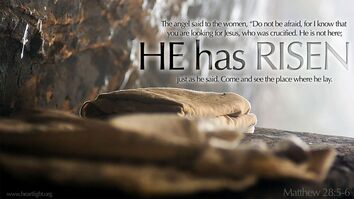
And suddenly there was a great earthquake; for an angel of the Lord, descending from heaven, came and rolled back the stone and sat on it. His appearance was like lightning, and his clothing white as snow. For fear of him the guards shook and became like dead men. But the angel said to the women, “Do not be afraid; I know that you are looking for Jesus who was crucified. He is not here; for he has been raised, as he said.
                                                                        Matthew 28:2-6a
 

As the two Marys approached the tomb, they encountered a messenger of God proclaiming that Jesus Christ had risen. It was clearly an overwhelming experience, but the angel exclaimed, “Do not be afraid.” It seems whenever someone has a direct encounter with a messenger of God they are offered the calming invitation to set aside their fear.

As Easter people we are called to new life in Christ. I am on a journey to new life by learning and incorporating anti-racist practices into my life. I became especially committed to this effort after the murder of George Floyd drew attention to the horror of a police officer intentionally suffocating a defenseless Black man. It seemed like we white folks might finally see what our siblings of color have been telling us for years. I was hopeful we might muster the conviction to bring about change in our systems of white power. Sadly, it feels like the fervor for justice has waned. When we encounter God’s truth, we need to heed the invitation, “Do not be afraid.”

In my own journey, I’ve had a number of occasions when I’ve been called out for unintentional racially insensitive comments. They were painful, especially since they were in a group setting and I felt embarrassed by the public correction. Rather than approaching it as a learning experience, I approached it with a defensiveness that showed my white fragility in all its glory.

As a result, I find myself overthinking my responses in a multiracial group. And when I stifle my authentic self, what I end up saying sounds ingenuine. Recently, I was a part of a group conversation where some white people expressed similar fears of engaging in courageous conversations around racism. A person of color asked, “What are you afraid of?” I’ve really been pondering that question. My “go to” answer is that I don’t want to say anything offensive or racist. But if I’m truthful I’ve been afraid to experience the discomfort of being called out for saying something offensive. I don’t want to feel shame or embarrassment. When we encounter God’s truth, we need to heed the invitation, “Do not be afraid.”
 
When the Florida legislature recently passed a law that forbids teaching anything that makes a person (and it really means a white person) uncomfortable, it caused me, as a Certified Christian Educator, to think about the role of discomfort in learning. I love this tip from the Harvard Business Review article by Peter Bregman, “When You’re Learning, You Should Feel Uncomfortable.”  It says, “Being a beginner at something can feel awkward and embarrassing, especially if you’re used to being an expert. But those feelings are the inescapable growth pains that come from developing and improving. To get used to the discomfort, know that it’s brave to be a beginner.”1 Most of us who are white are beginners at having to challenge our white supremacy. But let’s be real, the systems upon which our country was built were constructed to benefit wealthy white men.

So, I invite all of you who are white like me to take a risk. The presbytery’s Anti-Racism Committee sponsors opportunities for multiracial conversation, learning and action. Why not participate in one of them? We’ve created a six-session study to go along with our Anti-Racism Statement and are looking for churches ready to have a discussion around race. WARNING: YOU MAY EXPERIENCE DISCOMFORT! But rather than run from it, why not sit with it for a while--heed the invitation, “Do not be afraid.”

Our presbytery Book Club is also reading “The Color of Compromise: The Truth About the American Church’s Complicity in Racism.” Why not join in reading the book and discussing it together on Thursday, May 5th at 1:30 p.m. in the presbytery office conference room or via zoom? Email me if you’re interested in either opportunity.
I want to close with a note of gratitude to my sisters and brothers of color. It is not up to you to teach me or to help me understand. But I am thankful to have you as partners on this journey. I have learned so much from your stories, our challenging discussions, and our adventures together. Thank you for walking with me in this season of growth. 

https://hbr.org/tip/2019/09/when-youre-learning-you-should-feel-uncomfortable

Sunday, May 1, 2022

The History of the Ocoee Massacre


A History of the Ocoee Massacre Resource Page

The Ocoee massacre was a brutal killing of African Americans and an "unimaginable example of racial hatred".  On Election Day in 1920, Mose Norman, a black U.S. citizen attempted to vote in Ocoee and was turned away at the polls.  That evening a mob of white angry armed men came to the home of July Perry looking for Mose, Perry was lynched and the mob proceeded to murder black citizens and burn their homes to the ground ("Yesterday, This Was Home" Orange County Regional History Center Exhibit).  The exact number of those killed remains unknown, all were forced to flee, some had to hide in the alligator infested swamp.  The scares of this event run deep in the black community.  

Prior to the night of the massacre the KKK held parades around the state to intimidate black voters.  It is believed that between 30-80 black citizens were killed that night.  What is known is that 255 black residents lived in Ocoee according to the 1920 census, and after that night, only 2 remained and from 1930-1970 no black citizens lived in Ocoee (The Truth Laid Bare: UCF Magazine).  It is heartbreaking that this history has been for too long ignored, stifled and denied.  We know these hateful events can never be forgotten.  It is important to educate ourselves and others about the fruit of the poison of white supremacy.  The videos below are documentary evidence recounted of the terrible events of that night.  May we never repeat the sins and evil of our past.  


The Truth Laid Bare Video: UCF on Ocoee Massacre 

Watch video links below for the history of the Ocoee Massacre in Florida. 


New 9 Report on Ocoee Massacre

100th Anniversary of Ocoee Masacre


To learn more about the Ocoee massacre click on the video links above, or download the pdf provided by the Office of Program Policy Analysis and Government Accountability titled "Ocoee Election Day Violence- November 1920.  That link is provided below: 


Isaiah 58:6-8

Is not this the fast that I choose: to loose the bonds of injustice,to undo the thongs of the yoke,to let the oppressed go free, and to break every yoke?  Is it not to share your bread with the hungry, and bring the homeless poor into your house; when you see the naked, to cover them and not to hide yourself from your own kin? Then your light shall break forth like the dawn, and your healing shall spring up quickly; your vindicator shall go before you, the glory of the Lord shall be your rear guard.


Saturday, April 16, 2022

How and Why the Church Fuels White Supremacy


Photo by Jon Tyson via Unsplash

An ecumenical panel explores the extent of that sin and how the church can heal

by Mike Ferguson | Presbyterian News Service


LOUISVILLE — People recruiting for a white supremacist cause on a Sunday morning will find more success at their local church than at their local coffee shop.

That’s what research revealed for Dr. Robert P. Jones’ most recent book, “White Too Long: The Legacy of White Supremacy in American Christianity,” and it’s a fact he shared Saturday during the White Supremacy and American Christianity webinar attended by about 2,500 people. Jones, the CEO and founder of the Public Religion Research Institute, joined Fr. Bryan Massingale, the author of “Racial Justice and the Catholic Church” and the Nancy Buckman Chair in Applied Ethics as well as the Senior Ethics Fellow at Fordham University’s Center for Ethics EducationDr. Marcia Chatelain, winner of the 2021 Pulitzer Prize in History for her book “Franchise: The Golden Arches in Black America” and a professor of history and African American Studies at Georgetown University, answered Jones’ and Massingale’s presentations with her own critique.

The NETWORK Lobby for Catholic Social Justice sponsored the online conference, with help from organizations including the Center for Faith, Justice & Reconciliation at Union Presbyterian Seminary.

Massingale said when he read that statement in Jones’ book, “it jumped out at me. There is something about Christianity that inclines white people to be more racist. I want those participating to pause and let that sink in.”

Fr. Bryan Massingale


“We have this idea of people who marched with torches in Charlottesville or those who stormed the Capitol in January of last year,” Massingale said. “But what we are talking about is people in church, that white Christianity itself incubates a sense of white superiority … I remember the first time I saw an image of a Black Christ. A part of me said, ‘what?’ I had been malformed and deformed. God and Jesus being white is the image I got.”

“If you believe a white person rules in the heavens, you believe they should rule here on Earth,” Massingale said. “The idea of representation isn’t idle. These things have real political impact and create a culture of white Christian nationalism.”

Which is why the faith of former President Barack Obama was attacked, Jones said. “It seemed out of place for this Black Christian,” Jones said. “If we can make him other than Christian, that’s why he faced this attack of being Muslim. White Americans made him ‘other.’”

For many people, just the term “white supremacy” is hard to hear, Jones said. “We think of old photos of people burning a cross. It’s a convenient way to think about white supremacy because we don’t know anybody like that.”

But in “any city we go to” there’s a history of redlining, a “straight-up expression of white supremacy,” Jones said. In many communities, churches were seen as institutions protecting the neighborhood from non-white people entering them. Jones’ own grandfather was a deacon in his church. It was his job to stand outside the church before worship “to make sure no non-white person entered the sanctuary. That history is very near to us and is certainly very present with us in many ways.”

Massingale remembers as a seventh grader the first time attending Mass in a new community. Members of the congregation “told us you would be more comfortable attending your former church.” Their message, he said, is “this church belongs to white people.”

When Massingale presents on racism and white supremacy, “People ask, ‘How can I talk about this in my parish and not make white people uncomfortable?’ I turn it around: ‘Why is it the only group that is never supposed to feel uncomfortable talking about race is white people?’”

In January, Jones published a piece called “The Sacred Work of White Discomfort.” He wonders: What kind of growth do we get without discomfort?

“Do we want to be comfortable, or do we want to be free?” Jones said during Saturday’s webinar. Do we want to keep the status quo, “or work out our salvation with fear and trembling? This commitment to white supremacy is the air we breathe and the water we swim in,” Jones said. “We don’t see how it has distorted the gospel and affected our ability to love one another.”

“If we want to hand down the faith to our kids, we need to think about the work that has to be done,” Jones said. “I can try to find a comfortable faithfulness of my ancestors or I can be faithful to my kids — but I cannot do both.”

What’s needed, Massingale said, is a “racial metanoia” — a “profoundly and radically different path.” For Catholics, the Sacrament of Penance is a five-step process:

  • An examination of conscience, or honest truth-telling.
  • Contrition, or “the genuine remorse and lament that we haven’t seen” from those holding on to the legacy of white supremacy, Massingale said.
  • Confession, a public acknowledgement so there’s “some kind of ownership” to the sin, Massingale said.
  • Purpose of amendment, or “taking concrete actions to heal the harm done,” such as making reparations.
  • Proclamation of praise, the “resolution for a new beginning and walking together,” Massingale said.

“That’s a roadmap for what we need to,” Massingale said. “The question is, do we have the will and the courage it takes to transfer our convictions into action?”

Dr. Marcia Chatelain


Chatelain identified three issues “to help us get to the core of the way white supremacy operates in American religious communities.”

  • “It’s not just about the preservation of ideas of identity,” Chatelain said. “It’s the hording of resources, the exploiting of people and the planet to multiply resources.” Churches have a real opportunity to think about and act upon exclusion and redlining in the neighborhoods where they’re located, Chatelain said.
  • Misogyny, especially how “masculinity hinges on protecting white women.” Misogyny is not only a way of controlling women — it’s a “justification for racial violence.” What would it mean, Chatelain wondered, for clergy — particularly male clergy — to speak out against misogyny.
  • The role Christians play in civic life. “The anti-death penalty movement is not as strong as the anti-abortion movement. That tells us something powerful,” Chatelain said. “It’s often about backlash rather than creating policy that moves people forward.”

Chatelain has two prescriptions for people of faith. The first is not to disengage from the community. “When I teach students, they hesitate because they think this will alienate themselves from several generations of their family,” Chatelain said. Secondly, can we imagine a world “where the church takes seriously releasing its power to show that another path is possible?”

“We have a lot of difficult work before us,” Chatelain said. “But I am heartened there are people who make this choice and are strengthened by these acts rather than degraded by them.”

“This truth-telling is what we need this Lent as we move into Holy Week,” said Mary J. Novak, executive director of the NETWORK Lobby for Catholic Social Justice, a journey that invokes “emerging from death to life, toward freedom by action and by reparatory justice.”

Presbyterian News Service April 12, 2022

This work is licensed under a Creative Commons Attribution-NonCommercial-NoDeratives 4.0 International License and is re-printed here with permission.  Click on above link to be directed to the original story.