Translate

Thursday, July 29, 2021

La Duda Es Buena

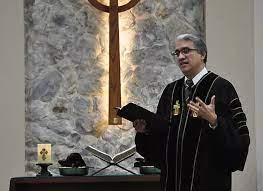
Rev. Dr Mercado predicated en la Iglesia Presbiteriana El Redentor. 

 LA DUDA ES BUENA 

Rev. Dr. Carmelo Mercado

Encuestas recientes han confirmado que 65 millones de adultos en los Estados Unidos han dejado de asistir a los servicios de adoración, y 2.7 millones los abandonan cada año. ¡Esto es antes de la pandemia! Entre 1933–2000, el 70% de los estadounidenses asistieron constantemente a la iglesia, pero ahora es menos de la mitad (47%). Por otro lado, hay un 23% de las personas (generalmente la generación más joven o milenial) llamadas "NINGUNAS" porque no marcan ninguna casilla de afiliación religiosa cuando son encuestadas, y su número está creciendo. No son necesariamente ateos. Por el contrario, pueden ser buscadores espirituales o personas que están justamente desilusionadas con la religión institucionalizada; que tienen dudas sobre los sistemas de creencias fundamentalistas; y que cuestionan el por qué muchas personas religiosas parecen ser tan crueles, críticas, de mente cerrada y racistas (¡muy contrarias a las enseñanzas de Jesús!). Para ellas, la mayoría de los creyentes están menos enfocados en dirigir el camino hacia la justicia social, la equidad racial, el cuidado de la tierra, la reforma migratoria y el establecimiento de la paz; y están más obsesionados con temas de sexualidad, creencias doctrinales “correctas”, posesión de armas, islamofobia, anti-ciencia, conspiraciones de vacunación, políticas partidistas, etc. En lugar de imitar a Cristo al salir y servir a los pobres, rechazados, enfermos y marginados, estos cristianos están debatiendo, condenándose y excomulgándose unos a otros, por ejemplo, ¡sobre la base de si realmente hay un lugar de tormento literal/eterno llamado Infierno o no! En otras palabras, la base de la unidad cristiana ya no es la solidaridad humana o "la fe que actúa mediante el amor [incondicional]" (Gálatas 5:6, NVI), sino la uniformidad a una interpretación dogmática y estrecha de las Escrituras según la definición de ciertas autoridades religiosas (e incluso comentaristas políticos). No es de extrañar que millones estén experimentando una crisis de fe, incredulidad y duda. La duda puede ser desorientadora, solitaria y desgarradora (especialmente cuando se mantiene en secreto). Sin embargo, una fe en la que no hay duda es de hecho una fe superficial. Si su fe se hiciera añicos debido a la duda, entonces era una fe inestable en primer lugar. La duda puede deconstruir sin destruir. Sin incredulidad, no habrá cambios ni reforma del statu quo. La duda nos obliga a cuestionar, repensar, reflexionar, reevaluar y reconsiderar. De hecho, la duda puede conducir al crecimiento. Acabo de terminar de leer Faith After Doubt (o La Fe Después de la Duda) de uno de mis autores favoritos, Brian McLaren, donde describe pastoralmente sus Cuatro Etapas de la Fe (o su desarrollo gradual): 

1. La Simplicidad es donde los niños (y aún los adultos) no cuestionan las figuras de autoridad, y la creencia es dualista (es decir, tener las respuestas correctas contra las incorrectas; nosotros contra ellos; el bien contra el mal). Muchos adultos nunca sueltan la Etapa 1 o 2. Sólo la duda nos impulsa a cuestionar cada etapa. 

2. La Complejidad reconoce las áreas grises de la vida, y que las figuras de autoridad son entrenadores que nos ayudan con los “pasos” para lograr el “éxito” espiritual rezando más y esforzándose más. 

3. La Perplejidad sospecha de los líderes como manipuladores que controlan a los ingenuos, y critica las creencias como prejuiciosas, intolerantes, hipócritas, tóxicas, hirientes o incluso peligrosas. 

4. La Armonía ve a los líderes como imperfectos, toda la vida es sagrada y un regalo misterioso, y las acciones amigables de Dios a través de los demás y su presencia amorosa en toda la creación son primordiales. En Simplicidad, la duda es un pecado o una traición. En Complejidad, la duda es una enfermedad que hay que curar. En Perplejidad, la duda es una virtud que debe nutrirse. En Armonía, la duda es una parte necesaria de la vida para pasar de una etapa a otra. La duda destrona la supremacía de nuestro ego, religión, raza, política, especie o lo que sea. La duda debería llevarnos a confiar más en la suprema bondad y sabiduría de Dios, en lugar de en nuestras propias verdades estrechas acerca de Dios. Como escribió la difunta Rachel Held Evans a los escépticos de todo el mundo: "No son locos, y no están solos". 


Rev. Dr. Mercado es el capellan en Magnolia towers y WestminsterPlaza, fue el pastor anterior en la primera iglesia presbiteriana el redentor en el Presbytery de Florida Central.

Wednesday, July 28, 2021

Doubt is Good by Rev. Carmelo Mercado


 DOUBT IS GOOD 

Rev. Carmelo Mercado, DMin, ChFC® 


Recent polls have confirmed that 65 million adults in the United States have stopped going to worship services, and 2.7 million are dropping out every year. This is before the pandemic! From 1933–2000, 70% of Americans consistently attended church, but now it is less than half (47%). On the other hand, there are 23% of people (usually the younger or millennial generation) called “NONES” because they do not check any religious affiliation boxes when surveyed, and their number is growing. They are not necessarily atheists. On the contrary, they may be spiritual seekers or people who are justly disillusioned with institutionalized religion; who have doubts about fundamentalist belief systems; and who question why many religious folks seem to be so mean, judgmental, closed-minded, and racist (quite contrary to Jesus’ teachings!). For them, most believers are less focused on leading the way on societal justice, racial equity, earth care, immigration reform, and peacemaking; and they are more obsessed on sexuality issues, “correct” doctrinal beliefs, gun ownership, Islamophobia, anti-science, vaccination conspiracies, partisan politics, etc. Rather than imitating Christ in going out and serving the poor, outcast, sick, and marginalized, these Christians are debating, condemning, and excommunicating one another, for example, on the basis if there is truly a literal/eternal place of torment called Hell or not! In other words, the basis of Christian unity is no longer human solidarity or “faith expressing itself in [unconditional] love” (Galatians 5:6, NLT), but uniformity to a dogmatic, narrow interpretation of Scriptures as defined by certain religious authorities (and even political commentators). It is no wonder that millions are experiencing a faith crisis, unbelief, and doubt. Doubt can be disorienting, lonely, and heartbreaking (especially when kept secret). However, a faith where there is no doubt is indeed a shallow faith. If your faith were to shatter because of doubt, then it was a shaky faith in the first place. Doubt can be deconstructive without being destructive. Without unbelief, there would be no changes or reformation to the status quo. Doubt forces us to question, rethink, reflect, reevaluate, and reconsider. In fact, doubt can lead to growth. I just finished reading Faith After Doubt by one of my favorite authors, Brian McLaren, where he pastorally describes his Four Stages of Faith (or its gradual development): 


1. Simplicity is where children (and even adults) do not question authority figures, and belief is dualistic (that is, having the right answers vs. wrong ones; us vs. them; good vs. evil). Many adults never leave Stage 1 or 2. Only doubt propel us to question each stage. 

2. Complexity acknowledges gray areas in life and that authority figures are coaches who help us with “steps” to achieve spiritual “success” by praying more and trying harder. 

3. Perplexity is suspicious of leaders as manipulators who control the naïve, and it is critical of beliefs as bias, intolerant, hypocritical, toxic, hurtful, or even dangerous. 

4. Harmony views leaders as imperfect, all life is sacred and a mysterious gift, and God’s friendly actions through others and loving presence in all creation are paramount. In Simplicity, doubt is a sin or betrayal. In Complexity, doubt is a disease to be healed. In Perplexity, doubt is a virtue to be nurtured. In Harmony, doubt is a necessary part of life to move from one stage to another. Doubt dethrones the supremacy of our ego, religion, race, politics, species, or whatever. Doubt should lead us to trust more in God’s supreme goodness and wisdom, rather than our own narrow-minded truths about God. As the late Rachel Held Evans wrote to doubters everywhere: “You’re not crazy, and you’re not alone.” 


Rev. Dr. Carmelo Mercado is the chaplain at Magnolia Towers and Westminster Plaza, he served as the pastor at Iglesia Presbiteriana El Redentor  (El Redentor Presbyterian Church) in Oviedo Florida and as a seminary professor.


The book cited is Brian D McLaren's "When your beliefs stopped working and what to do about it, Faith After Doubt" published by St. Martin's Publishing Group.  Purchase it at Amazon on line or other fine book distributors. 


Thursday, July 15, 2021

A Conversation with Leaders of the Presbyterian-Reformed Church in Cuba (IPRC)


Recorded from a video conference call recorded March 4, 2021. Hosted by the PC(USA) Cuba Partners Network. Moderated by Rev. John Potter and Randy Simpson, CPN Co-conveners with IPRC leaders: Reverend Dora Arce, Moderator (General Council) Pastor, San Antonio de los Baños Presbyterian Church Reverend Liudmila Hernández, Vice Moderator (General Council) Pastor, First Presbyterian Church, Havana Reverend Edelberto Valdés, General Secretary (General Council) Pastor, Caibarién Presbyterian Church Reverend Izett Samá (General Council) Pastor, Los Palos Presbyterian Church; Secretary of Havana presbytery; Reverend Alison Infante General Council Pastor, Cardenas Presbyterian Church Dr. Reinerio Arce (General Council) Associate Dean, Evangelical Theological Seminary; General Council Reverend Dr. Carlos Emilio Ham Rector, Evangelical Theological Seminary

This video discusses the current crisis in Cuba and discusses the impact of the continued embargo and the Covid pandemic.

00:00 - Welcome 00:45 - Prayer 01:25 - Introductions 02:44 - Overview of the Current Crisis in Cuba 10:25 - Responding in Partnership 16:40 - Why Support the Synod? 22:00 - What is the Magnitude of the need? 27:15 - What about the Seminary (SET)? 32:47 - How We Can Provide Assistance 38:05 - Question: Is Food Available? How are People Managing? 43:20 - Question: How Important is Communication During this Crisis? 45:15 - Question: Are Living Waters, Gardening and Other Programs Working? 48:10 - Slide Show with Community Programs (Brief) 50:30 - Thank You and Closing 51:30 - Prayer 53:09 - Goodbye 53:28 - (End)


FPCU's Priscilla Chase Getchell: A Salute


Salute: Umatilla's Priscilla Chase Getchell was put here to serve

Keith Oliver
For the Daily Commercial


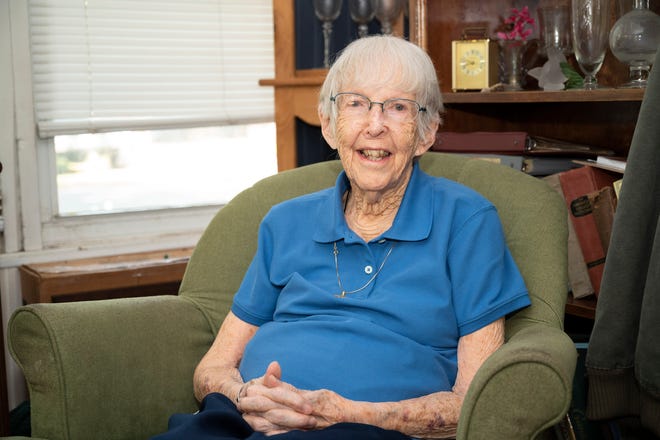
Navy Veteran Priscilla Getchell, 100, at her home in Eustis.

UMATILLA – She belonged to the Chiefs' Mess an astonishing two and a half years after enlisting.

With her late Army officer veteran husband, Ralph, she raised nine children – all sons.

This 1984 Lake County Citizen of the Year and inaugural inductee into the U.S. Navy's Flight Simulator Hall of Fame will be 100 years old this summer - and she's still displaying the wit, sharpness, physical health and life-is-a-wonder exuberance most folks dearly hope to enjoy in their 80s.

She is Umatilla force of nature Priscilla Chase Getchell, a joy-filled voluntarism addict and unabashed community cheerleader whose philosophy of life is simple and direct:

"You were put here to serve."

That's according to the town's Vice-Mayor Laura Wright, a Navy brat and fellow Massachusetts gal who regards her dear friend of 30 years as "my mentor."

"She is a scream and I love her," said Wright, referring to Priscilla Getchell's no-excuses, take-no-prisoners approach to "getting it done … for others."   

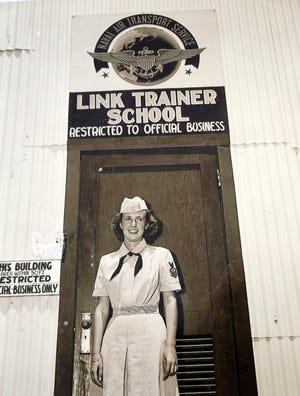
Navy Veteran Priscilla Getchell shown in front of a Link Trainer School.

Chatting with Mrs. Getchell at her picturesque, real-Florida lakefront property on a sunny morning in Dona Vista last week, her skills in flower gardening were obvious, as was her practical, country furniture and distinctive doors, shelving and trim.

Even more obvious was her bright-eyed, go-grab-it take on living that has always been shot through with the rich ore of gratitude for:

- receiving an anonymous scholarship to Boston University upon graduation from high school.- being recognized by the Navy for her chutzpah and extraordinary math skills which obliterated any supervisors' real or imagined notions of what a WAVE (Women Accepted for Volunteer Emergency Service) could or could not do for the war effort.

- a gift for music which led to some extraordinary performing and kibitzing opportunities with an All-WAVE choral group, including exposure to the original Von Trapp Family and Hollywood musical superstar Jeanette McDonald.

- a family-infused love for physical fitness and the outdoors that has included field hockey and softball in high school, a lifelong walking habit and owning a Lake County horse ranch which included daily trail rides for the public in addition to the normal punch list of loading hay, mucking stalls and chasing down recalcitrant geldings.

- a decade-plus of joyous, symbiotic energy on behalf of Angel Flight and the Umatilla Library.

- and an extraordinarily "giving and involved" church family (Umatilla's First Presbyterian).

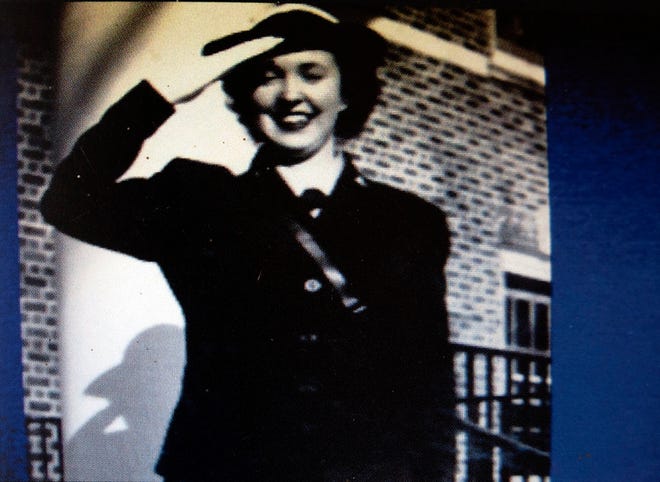
Navy Veteran Priscilla Getchell during her time in the service.

The Sons of Katie Elder, a classic western starring John Wayne, have nothing on Priscilla Getchell's accomplished lads:

John is a retired Lake County sheriff's deputy who founded the LSCO Color Guard while David and Stephen earned regional and national reputations in the worlds of engineering and construction, respectively. 

Five of her boys pulled duty in the Armed Forces: Adam served at the Jet Propulsion Lab at Edwards Air Force Base; Paul was a Mediterranean Sea patrolling U.S. Marine NCO; and Tim (the Marine gunny), Andrew (the Army MP) and Ralph (the hotshot Air Force pilot) all found themselves sharing the same swath of real estate during Operation Desert Storm.

In fact Ralph, who retired as a colonel, had the distinction of leading the first bombing raid into Baghdad.

Sadly, son Peter died at mid-life, succumbing to terminal illness - nursed through the ordeal by his mother.

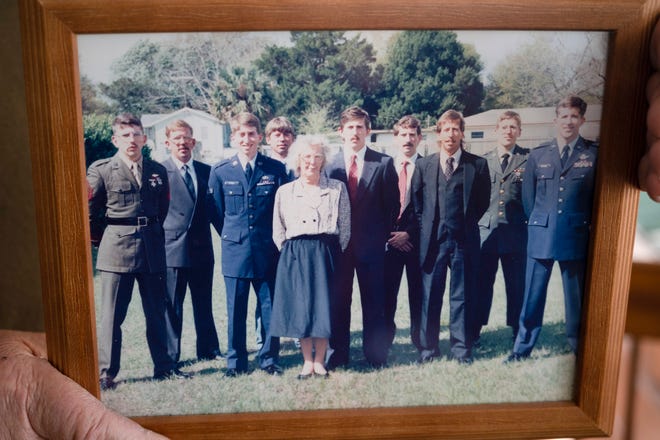
A framed photo of Navy Veteran Priscilla Getchell and her nine sons.

Priscilla's growing-up family moved to Maine where she met her future husband before leaving home; the pair corresponded, as friends, throughout the war. 

In one letter, the future Mrs. Getchell mentioned that she "always wanted a big family," to which the lieutenant responded with, "sounds good to me."

"Oh, boy," a mischievously grinning Priscilla told an interviewer, "I was thinking, 'your goose is cooked.'"

Reprinted by permission: original article at Daily Commercial can be linked below by

author Keith Oliver.  

Daily Commercial original article

Priscilla is a member of First Presbyterian Church.  I got to know her during my tenure as Pastor.  She is a beloved member of the community.  It was truly a blessing to get to know her, she has known heartbreak and triumph, yet has always maintained a wonderful spirit about her.  She is truly a remarkable person.  This article is posted in honor of her upcoming 100th birthday. Happy Birthday Priscilla!  May you celebrate many more.  


Friday, June 18, 2021

Links to Juneteenth and Race Resources


image Art in the Christian Tradition: Copyright © 2024 Jean and Alexander Heard Libraries, Vanderbilt University
used Creative Commons Attribution Non Commercial use

Gordon Granger rode into Galveston, Texas to announce that the Civil War had ended and salves had been freed.  These were presumably the last slaves in the United States to learn of their freedom.  Information traveled slowly and people gradually learned of their freedom.  Below are links to liturgical, historical, and ecumenical resources to educate, commemorate, and celebrate this important historical milestone.  

ELCA link to Juneteenth Liturgical Resources

Episcopal Diocese Prayer for Juneteenth

Fellowship Of St. Moses the Black: Orthodox Resources for Racial Reconciliation

Archdiocese of Baltimore Prayer for Juneteenth

National Black Catholic Congress

Episcopal Prayer for Juneteenth

St James Episcopal Church Resources for Juneteenth

Anti-Race Committee of Central Florida Presbytery

United Methodist Church Juneteenth Resources

Liturgy that Confronts White Supremacy Episcopal Church

African American Lectionary

Holy Spirit Lutheran ELCA Juneteenth Service

Presbyterian Historical Society Juneteenth

Presbyterian Church (USA) Dismantling Structural Racism

Presbyterian Outlook Magazine Juneteenth

Episcopal Church Race and Reconciliation

Facing Racism pdf

Facing Racism Study Guide

인종차별에 직면하여: 정책

미국장로교회의 인종부(REM)를 위한 다양성에서 평등으로의 책임 전환

Enfrentamos el Racismo: La política

Enfrentamos el Racismo: Guía de estudio


Juneteenth Liturgical Resources from Central Florida Presbytery


 Juneteenth Flag

Echoing the red, white and blue of the U.S. flag, the Juneteenth flag signifies that slaves and their descendants are true Americans. A star in the middle represents Texas, with a larger outer star representing a new freedom and a new people.


Juneteenth is a holiday that celebrates the day when General Gordon Granger rode into Galveston, Texas to announce that the Civil War had ended and salves had been freed.  These were presumably the last slaves in the United States to learn of their freedom.  Information traveled slowly and people gradually learned of their freedom. 

The following resources have been compiled for use in commemorating this day. 


Call to Worship

The Lord our God is great.
The Lord is worthy of our praise.
Come let us remember the great things God has done for us.
Let us not neglect to teach our children the greatness of God.
Let us not forget our nation’s past and those who have gone before us.

Let us remember the hurt and harm caused by racism and give thanks for those who’ve worked to overcome this evil.
Let us lift our voices in song, lift our arms in praise, and open our hearts in gratitude.
Let us greet God with our hymn of praise.


—Adapted from Eugene Blair. 21st Century Africana Liturgy Resources: “Worship Resources for Juneteenth Day Celebrations,” © 2007, 2008

Opening Prayer

Almighty God, we come to worship you today with open hearts and open minds. We want to hear and receive what you have to say to us in this service. Speak to us today as you spoke to those who went before us. Tell us the stories of your wonder and greatness. We are ready to hear them. Remind us once again of your grace and love. Help us teach your goodness to our children and the next generation. Amen.

— Eugene Blair, 21st Century Africana Liturgy Resources: “Worship Resources for Juneteenth Day Celebrations,” © 2007, 2008,

A Litany for Juneteenth

[Option: Assign one person to each letter, giving them that letter to hold up as they read the corresponding line.]

“J” Voice 1: Juneteenth represents the joy of freedom, the chance for a new beginning.
“U” Voice 2:  Unless we expose the truth about the African American slave experience, 

Americans won’t truly be free.

“N” All: Never must we forget the people who endured one of the worst slave 

experiences in human history.

“E” Voice 1: Every American has benefited from the wealth blacks created through 

more than two hundred years of free labor, and Juneteenth allows us to acknowledge that debt.

“T” Voice 2: To encourage every former slave-holding state to follow Texas’s 

example and make Juneteenth a state holiday.

“E” All: Every day in America, blacks are reminded of the legacy of slavery. 

Juneteenth counters that by reminding us of the promise of 

deliverance.

“E” Voice 1:  Even on the journey to discover who we are, Juneteenth allows us to 

reflect on where we’ve been, where we’re at, and where we’re going as a 

people.

“N” Voice 2: “Never give up hope” is the legacy enslaved peoples left. It was this 

legacy that produced black heroism in the Civil War and helped launch the 

modern civil rights era. It is this legacy we celebrate.

“T” Voice 1: To proclaim for all the world to hear, that human rights must never again 

become subservient to property rights.

“H” Voice 2: History books have told only a small part of the story; Juneteenth gives us 

a chance to set the record straight.

All:  Freedom is always worth celebrating! Thanks be to God! Amen.


—Adapted from a portion of “The Black Church and Juneteenth” by Charles Taylor


When asked why we celebrate...because as a communal people we know, none are free until all are free. As followers of Christ, we are drawn together because of our common belief in the mission of Jesus, who "came to proclaim liberty to the captives, and recovery of sight to the blind, to set at liberty those who are oppressed" (Luke 4:18). June 19th represents the day that declaration of freedom was set in motion for people of African descent. We have been on a long uphill journey and are just now learning to truly tell our story and claim the fulfillment of Christ’s promise, "it was for freedom that Christ set us free; therefore, keep standing firm and do not be subject again to the yoke of slavery" (Galatians 5:1). 

  • Written by Ruling Elder Ralphetta Aker, 2021


Prayer of Confession


We acknowledge that racism is a sin against God and against those whose skin color is different than ours.  We are all created in the image of God.  We confess our failure to fully follow Jesus Christ in loving our neighbors as we love ourselves.  We acknowledge that we cannot truly love God, whom we have not seen, if we do not love our brothers and sisters whom we see every day (1 John 4:20).


We have failed to take responsibility for our part in the struggle against systemic racism, and we as a nation have failed to demonstrate our love for our sisters and brothers who are Black, Indigenous, and People of Color (BIPOC).


Jesus Christ, by your word of healing grace and transforming power, forgive us and make us new in your image.  Make us agents of your unconditional love for all people.


Amen.


Affirmation of Faith


Spoken introduction: People of God, Scripture says that “in Christ Jesus you are all children of God through faith. As many of you as were baptized into Christ have clothed yourselves with Christ. There is no longer Jew or Greek, there is no longer slave or free, there is no longer male and female; for all of you are one in Christ Jesus. And if you belong to Christ, then you are Abraham’s offspring, heirs according to the promise” (Galatians 3:26–29, NRSV). Let us therefore stand together and profess our faith as one body using the words of the . . .

From Confession of 1967 -- Book of Confessions, 9.44 a. (Inclusive Language Text)

God has created the peoples of the earth to be one universal family.

In his reconciling love,

God overcomes the barriers between sisters and brothers

and breaks down every form of discrimination

based on racial or ethnic difference, real or imaginary.

The church is called to bring all people

to receive and uphold one another as persons

     in all relationships of life: in employment, housing, education,

   leisure, marriage, family, church, and the exercise of political rights.

Therefore, the church labors for the abolition

of all racial discrimination and ministers to those injured by it.

Congregations, individuals, or groups of Christians

who exclude, dominate, or patronize others, however subtly,

     resist the Spirit of God

and bring contempt on the faith which they profess.

* In 2002 the Presbyterian Church (U.S.A.) revised dated, gender-limited terminology in C67 to reflect inclusive language

OR

Confession of Belhar (1986), Book of Confessions 10.5

We believe

ï         that God has entrusted the church with the message of reconciliation in and through Jesus Christ;

ï         that the church is called to be the salt of the earth and the light of the world, that the church is called blessed because it is a peacemaker, that the church is witness both by word and by deed to the new heaven and the new earth in which righteousness dwells;

ï         that God’s life-giving Word and Spirit has conquered the powers of sin and death, and therefore also of irreconciliation and hatred, bitterness and enmity, that God’s life-giving Word and Spirit will enable the church to live in a new obedience which can open new possibilities of life for society and the world.

  • Written by Rev. Linda Jaberg, adapted from the Central Florida Presbytery’s Statement on Racial Injustice
  • Litany adapted from Litany of Healing from Mercy Education Systems of America, Silver Spring, Maryland, mercyedu.org

Prayer of Thanksgiving 


Thankfully we praise you, O God, for your liberating power that broke shackles of oppression and restored humanity to the disenfranchised. Make us instruments of grace to resist slavery, in all manifestations, that no soul shall be denied the right to thrive and fully realize their divine purpose in you. In the name of the Liberating Christ, who died to set us all free, Amen.


  • Adapted from prayer written by the Rev. Sterling Morse, PCUSA, June 19, 2017

Prayer of Intercession


O God, you made us in your own image and redeemed us through Jesus your Son. Look with compassion on the whole human family; take away the arrogance and hatred that infect our hearts; break down the walls that separate us; unites us in bonds of love; and, through our struggle and confusion, work to accomplish your purposes on earth; so that, in your good time, every people and nation may serve you in harmony around your heavenly throne. 


Lord in your mercy, hear our prayer 


Out of the darkness we cry to you, O God. Enable us to find in Christ the faith to trust your care; even in the midst of pain. Assure us that we do not walk alone through the valley of the shadow, but that your light is leading us into life. 


Lord in your mercy, hear our prayer 


O God, where hearts are fearful and constricted, grant courage and hope. Where anxiety is infectious and widening, grant peace and reassurance. Where impossibilities close every door and window, grant imagination and resistance. Where distrust twists our thinking, grant healing and illumination. 


Where spirits are daunted and weakened, grant soaring wings and strengthened dreams. 


Lord in your mercy, hear our prayer 


O God, call us into a deeper relationship to be your church for the sake of the world. Help us to see with new eyes the injustices within church and society. Call us to have a loving heart that respects and uplifts the humanity and dignity of every person; open our ears to listen to and learn from the experiences of people of color. Open our mouths to speak up and about injustices. Join us with others to work for racial equity and inclusion for all people. 


Lord in your mercy, hear our prayer


  • Resource from the Juneteenth Worship Resource, Evangelical Lutheran Church in America, 2019

Resources compiled by 

Juneteenth Liturgical Resource Sub-Committee Members:CFP

Ruling Elder Ralphetta Aker

Ruling Elder Cris Heceta

Rev. Dr. Nancy Graham Ogne

Rev. Erika Rembert Smith


Central Florida Presbytery Link to Juneteenth Liturgical Resources
Sunday, April 18, 2021

Action Alert! A Call for Palestinian Rights


image Art in the Christian Tradition: Copyright © 2024 Jean and Alexander Heard Libraries, Vanderbilt University
used Creative Commons Attribution Non Commercial use


 Tell Congress to pass HR 2590 and hold Israel accountable for violations of Palestinian rights.

From the Office of Public Witness PC(USA):  This year marks a decade since the Office of Public Witness joined the Faith Forum on Middle East Policy. 

The Forum was first formed to serve as an informal coordination body for churches and church-based organizations working to support peace and justice in Israel-Palestine and the broader Middle East. 

Soon after forming, Faith Forum members began a coordinated effort, sending out messages to supporters to encourage action for change. Our alerts have focused on many different issues – settlement construction, home demolitions, restrictions on Palestinian movement, the killing of Palestinians without accountability, denial of religious freedoms, and more.

Take action with us again: call on Congress to pass HR 2590, which calls for accountability for Israel’s violations of Palestinian rights.

Because of the commitment of supporters like you, tens of thousands of messages have been sent to members of Congress lifting these concerns and asking for changes in US policy. And we have seen positive impacts.  

The introduction of legislation calling attention to Palestinian human rights concerns, like HR 2590, demonstrates a growing coalition within Congress that recognizes that violations of Palestinian rights cannot be ignored. Your actions are making a difference.

At the same time, the situation on the ground in Israel and Palestine has not improved. Home demolitions, settlement construction, settler violence, forced displacement, the Gaza blockade, and other violations of Palestinian rights continue unabated. As we have also noted previously, the different rights violations that we have highlighted cannot be viewed in isolation from one another. Taken together, they are each part of an Israeli structure of control and occupation that systematically discriminates against Palestinians in all regions of Israel and the Occupied Territories. And it is this systematic inequality and discrimination that must end if peace is to be achieved.  As Speaker Pelosi and members of Congress travel to Israel this week to express “ironclad” US support for Israel, we hope they will meet with Palestinians and visit the occupied territories, including Gaza.

Last month, Amnesty International became the latest organization in a growing list of Palestinian, Israeli, and international human rights organizations to issue a report detailing how discriminatory Israeli actions and policies qualify as a form of Apartheid against Palestinians.  

As faith communities, we have not all taken a position on using the word "Apartheid." Still, we recognize the systematic and structural inequalities that shape Palestinians’ lives and understand that we must study and prayerfully consider these reports and their conclusions. Here are links to the AmnestyHuman Rights Watch, and B’tselem reports.

And as you read these reports, we also ask that you take action by calling on Congress to pass HR 2590.

Join us and together we can bring change.

Note: The rhetoric around Palestinian Rights have been unfortunate as of late.  Any resistance, criticism or efforts at boycotts have been called anti-semitic, or somehow demonstrates hatred against Israel.  Nothing can be further from the truth.  The prophets in the Hebrew Scriptures repeatedly criticized and called Israel and her leaders to repentance.  One can be a supporter of the people and State of Israel, point out that the Palestinians recognized the State of Israel in 1993, although they have never had that recognition reciprocated, and still advocate for the Palestinians and the plight they currently face.  There was once a time when Jews, Muslims and Christians all lived together in this region.  See the link below for the riveting story of a Palestinian Christian living in this region. 

Blood Brothers: riveting story of living in Palestine