Translate

Saturday, October 7, 2017

Prayers of the People


The Prayers of the People have been a part of Christian worship since ancient times.  The earliest example comes from Justin Martyr who in the year 150,  mentions the prayers.  For centuries they have been part of the Daily Office and the eucharistic liturgy.   In most Christian worship today, the Prayers of the People follow after the sermon, or are said during the service of the Eucharist along with the Lord's Prayer.  In this video, a group called "The Brilliance" from their album, "Brother",  sing the prayers of the people set to instrumentation.  It is a moving and  meditative version of the Prayers.  The lyrics below have been slightly modified in order to be used as a prayer in any service of Christian worship regardless of the local context.

Lyrics: 

You hear us calling, You hear us calling, Abba Father. You hear us calling, You hear us calling, Abba Father. Lord have mercy.
Christ have mercy. Lord have mercy. Christ have mercy. You hear us calling, you hear us calling, Abba Father. You hear us calling, you hear us calling, Abba Father. Lord have mercy. Christ have mercy. Lord have mercy. Christ have mercy. Lord have mercy. Christ have mercy. Lord have mercy. Christ have mercy.

Prayers of the People

For the church of Christ around the globe,
that we may learn to be one, 
as you, along with the Father and Holy Spirit are One,
For the church of Christ in ____________, 
that we would grow in our unity with one another, 
seeking to understand more than to be understood,
for your church scattered across the neighborhoods of our great city,
that our lives of love and service may bear witness of an alternative story,
Lord hear our Prayer.

For all of us that continue to live in the tension of power and race in America,
that we would in humility discover our cultural biases,
and seek understanding from those that are different than us,
guide us to become advocates for justice and equality,
for President________ and Governor ____________,
that they would be granted grace to lead with civility, justice and peace,
that you would protect their families as they face the challenges attending
these offices.
Lord, hear our prayer.

For those who teach, tutor, and provide care for our children,
for those you clean, and repair our homes and offices,
for those who prepare and serve our meals,
may they find dignity and solidarity in you,
O Christ, who having all power, did not come to be served but to serve,
and in this knowledge, may we who benefit from such service,
receive it gratefully, employ it justly and hold them in highest esteem.
Lord, hear our prayer.

For the victims of mass slaughter in ___________________
and those who have to live with the tragic consequences,
we pray for your mercy and comfort,
we pray that these violent acts would be brought to an end,
for all who are vulnerable to the influence of violent extremist groups,
we pray for protection and merciful care 
to short circuit these cycles of poverty and violence,
We pray for your way of peace to take root in people's hearts and lives.
Lord, hear our prayer.

For those who live on our streets, we pray for relief and comfort,
that we, your people, may humanize our engagement with our
sisters and brothers, and know the grace of serving you as we serve them,
Lord, hear our prayer.

Thursday, September 21, 2017

On Party Affiliation and Christianity


This is a link to an article by Timothy Byrnes, it is rather lengthly and while it focuses on the Roman church and politics, titled "Bishops, Parties and Competing Agendas",  it can be applied across the board to any Christian denomination.  In the article, Timothy Byrnes argues that neither political party embodies the teaching of the Christian Church, and that the church therefore, should not tie itself to any party because political parties are ephemeral institutions, and that no political party ever has been or will be a vehicle for advancing christian teaching.  Take the case of the Roman Catholic Church, Christian teaching on the sanctity of life crosses parties lines and including abortion, opposition to the death penalty, strong advocating for refugees and immigrants, social welfare programs for the poor, climate change and environmental stewardship and seeking peace over war.  All those issues cross party platforms.  For those that claim to be Christians, it is important for us to remember that we should ultimate seek to follow the teaching of the church and Christ, and when making those hard decisions in the voting both, respect members of other parties for this very reason. Any party affiliation we hold should never be more important than the call to the Gospel of Jesus Christ which goes far beyond any political party aspirations to make a nation "great again", and calls us rather to humility and self sacrifice. It is only in the light of the gospel that all human endeavors are exposed as dead end roads, and all human solutions are dissolved.  

The apostle Paul certainly understood this, every epistle had an ethical implication to the theology he so carefully lays out, and while he lived in an empire that not only did not recognize his religious faith, actively persecuted and forcefully attempted to destroy it,  When the principles of the Kingdom, (blessed are the poor in Spirit, blessed are the meek, blessed are the peacemakers, blessed are those that mourn, blessed are those that hunger and thirst for justice, blessed are those that are persecuted, blessed are the merciful) are lived out both in our homes, neighborhoods, communities, and political life, we begin to see a transformation of our hearts, minds and lives  We get to the nitty gritty issues that are less abstract and certainly more real to us.  That is where God's reign begins to work itself out. The gospel always comes voluntarily and respecting people's autonomy.  It never forces, manipulates or uses coercion.  The early church never legislated its way into the kingdom. 

Yet there is an aspect of Christianity that is very political, the principles that both Jesus and Paul preached were inherently political.  When Paul claimed 'Jesus was Lord' it meant Caesar wasn't, in the words of N T Wright.  When Jesus was proclaimed the Son of God, the divine title competed for that of Caesar.  Jesus' teachings clearly struck a political cord or he wouldn't have been crucified.  Christians acts of conscience in refusing to give oblations to Caesar was also a faith statement and a political one.  John the Forerunner called out King Herod was as much a religious act as a political one.  When Polycarp refused to take the Imperial oath, it was a theological statement as much as a political one.  

We are political creatures and live in a representative republic where we can actively participate.  So we will have to wrestles with those decisions that are on our ballots.  We should be concerned with national and global issues that affect our neighbors, Paul's collection for the poor in Jerusalem during the famine that is scattered across several of his epistle clearly shows that his concern for the well being and "disaster relief" was essential to his understanding of his faith.  Paul instructs Christians to be good citizens, to obey the laws, and respect the government even a tyrannical one.  Yet, the message that Paul proclaims is also subversive, and it's a direct challenge to Imperial Rome.  

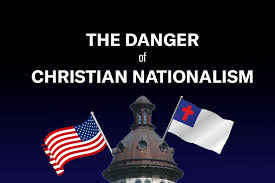
Today, Christians need to beware of the growing popular theology that is partisan and nationalistic, that continues to seek to wrap the United States into one particular political party or that seeks to make the United States an extension of the church.  Unlike in Paul's day, our situation may be more akin to Kierkegaard's attack on institutional Christianity, or Constantinism.  We may be making the same mistakes of generations before us that believed in a "Christian" state or a theocracy, is represented by one political party. Yet in going down this road, we are also seeing growing attacks on immigrants, the poor, science, and those that are members of other religions.  More and more countries are turning towards autocratic leaders and militarization as the answer to our problems, and segments of the church are beginning to march in step.  When we begin to think that any one political party is the answer to our societies problems, we need to be reminded again about what is at the core of the gospel message. 

N.T Wright has a fascinating take on the celebration of the Eucharist as a parody of the Roman pagan orgy feasts, a subversive if not direct challenge to the emperor cult with a new feast, the agape love feast, comprised of both Jews and Gentiles, Barbarians and Greeks,  women and men, around a new Lord, Jesus the Christ of God.  The mental and behavioral transformation of Rom 12:1-2 is one that calls us to a new formation in the image of Christ.  The new creation of the body of Christ is one where there is no more Greek or Barbarian, Jew or Gentile, male or female, gay or straight,  but all are one in Christ.  The identity of nation and ethnicity give way to a new identity in Christ and a new family in God.  If we are allowing popular talk radio, current political thinking, United States nationalism, or any number of influences to be more pertinent to us than the gospel, then it is time to remind ourselves that the gospel will always challenge us right at the heart of our own selfishness and self interest, and most politics at the end of the day are driven by self interest. It is than once again time to turn to the cross at Golgotha, and the empty tomb, to the fires of Pentecost, and to the ascended Christ, and to the "new creation" in the body of Christ that is so central to the early church's proclamation.  

We should be politically active, and interpret as best we can which policies we believe will bring about the most common good in society.  The church normally should be a non partisan space where it is recognized that no party represents Christianity.  But we are not living in normal times.  As we see a new rise in Christian Nationalism, in the drum beat of those Christians that are attempting to tear down the separation of Church and State, and the new influx of Christian worldview thinking into public education, we are faced with threats from within the church that will be damaging to both church and society.  Most Christians seemed unaware that these ideologies are not only un-Christian, un-Biblical, but dangerous to Christianity.  In trying to bring about a new morality and 'godliness' to the United States, we will have inadvertently bring about a new kind of oppression, authoritarianism, and deterioration of the church's own values.  We would have completely missed the point of what church is suppose to be about.  

Link to OMG blog
"article: Bishops, Parties and Competing Agendas"
Bishops, Parties and Competing Agendas

NT Wright Paul and Caesar

Sunday, September 10, 2017

Meditation for the Lord's Day: Proper 18A; Matt 18:15-20


Matthew 18:15-20New Revised Standard Version (NRSV)

15 “If another member of the church[a] sins against you,[b] go and point out the fault when the two of you are alone. If the member listens to you, you have regained that one.[c] 16 But if you are not listened to, take one or two others along with you, so that every word may be confirmed by the evidence of two or three witnesses. 17 If the member refuses to listen to them, tell it to the church; and if the offender refuses to listen even to the church, let such a one be to you as a Gentile and a tax collector. 18 Truly I tell you, whatever you bind on earth will be bound in heaven, and whatever you loose on earth will be loosed in heaven. 19 Again, truly I tell you, if two of you agree on earth about anything you ask, it will be done for you by my Father in heaven. 20 For where two or three are gathered in my name, I am there among them.”


Matthew's gospel reading this morning is one that is often quoted when problems arise in the church. Many Christians refer to this as the “Matt 18” model of conflict resolution.  This passage is open to abuse as we are sometimes all too ready to point out others faults.   Matthew, however, is concerned with Christian fellowship not judgmental nitpicking.  Fellowship is a central idea because it is clear that this is written to a community called to live out their faith together but still dealing with the realities of life.   Most of us yearn for a kind of deep human relationship, sometimes we idealize it. Think about how many television shows revolve around relationships, like "Cheers", "Glee", "How I Met Your Mother", "Friends", etc. We yearn for these relationships but we also know how hard they are to achieve. It is easier to live vicariously then living it out ourselves. Life is messy. Most of us have experienced the 'messy' of life this week; our work, home and other obligations all continued as we faced a major hurricane. Our stress and anxiety would come in waves. I went through the cycle of denial, “it won't hit us”, to panic, “ok, I don't know why I am buying 5lbs of potatoes”, to acceptance, “ok, this too shall pass...” Life is like that, as messy and dirty as the swirling storm around us.  We often need time to process events that have happened.  When we engage in relationship with others, conflict and hurt are inevitable.   Like an unexpected storm, relationship can have their own stormy challenges.  

Matthew is not only concerned that Christians come to believe the message of the kingdom, but that they understand that it has to be lived out in its messiness.  To risk real relationships is to engage those words we too often overuse; authenticity, honesty, risk, accountability. They may be buzz words, but these words should be used carefully.  To live in this way requires courage because confrontation can be scary, difficult and challenging.  Matthew engages us on two levels, personal, “go to the member of the church”, and corporate, “take one or two along with you.” The goal is unity and our witness to others of that unity. Imagine what can happen with this kind of unity. 

Matthew also reminds us that we are not alone in this, even in the midst of our failure and lame attempts at fellowship, Christ is with us. “Where two or three are gathered, I am there.” This can give us great comfort not only in the storm (hurricane Irma) but in the stormy relationships of our lives.  For me, this is both a challenge and an admitted area of weakness.  On my own, I do not know how to do this, and I often don't have the capacity to do this.  I can only desire it, pray for it, and rely totally on the grace of God to bring this fellowship to pass in my life.  I can seek the advice of others, and pray for the courage to confront and the humility to listen.  I can make overtures to others, and reach out trusting in God's grace to help me overcome my own hurts or fears.  

When we partake of the Holy Eucharist, we also proclaim these truths; that Christ is with us, that his Presence meets with us, and that we seek to be in Holy Communion with all the saints.  We want to make this a realization in our life.  So a few questions for reflection on this Sabbath morning.
  •  How much are we willing to give to have these kinds of relationship? 
  •  How difficult is it for you to go to someone and be open and honest?  
  • What practices have you used in the past that has helped you to navigate relationship struggles?
  • What characteristics are important to have in maintaining healthy spiritual relationships with others? 
  • What teachings of Christ do you find helpful in developing healthy spiritual relationships? 
  • How does the grace of Jesus Christ inform our relationships with others? 
  • How does the authority of the church help us in our interpersonal relationships in the church?  (Matt clearly has the church leadership in mind in the "binding and losing" command).
  • How can we respond when a relationship barriers seem insurmountable or conflict has reached a point where reconciliation doesn't seem possible? 
  • How can we deal with our pride that keep us from going to others and apologizing for a wrong or seeking reconciliation? 
  • In your church are you looking for a place to just blend in, or a place to share our faith with each other? How hard or easy has this been for you?
  • In areas where reconciliation is not possible, how can Christians move forward while still leaving the door open for future discussions? 

Heavenly Father,
you have called us in the Body of your Son Jesus Christ
to continue his work of reconciliation
and reveal you to the world:
forgive us the sins which tear us apart;
give us the courage to overcome our fears
and to seek that unity which is your gift and your will;
through Jesus Christ your Son our Lord,
who is alive and reigns with you,


The Following is a document from the Presbyterian Church (USA) entitled "Seeking to be Faithful Together", It is presented here as a guideline patterned after Matt 18 for conflict resolution in the church: 


"Seeking to Be Faithful Together"


Guidelines for Presbyterians During Times of Disagreement
In a spirit of trust and love, we promise we will...
Give them
a hearing... listen before we answer
John 7:51 and Proverbs 18:13
  1. 1  Treat each other respectfully so as to build trust, believing that we all desire to be faithful to Jesus the Christ;
    • _  we will keep our conversations and communications open for candid and
      forthright exchange,
    • _  we will not ask questions or make statements in a way which will intimidate
      or judge others.
  2. 2  Learn about various positions on the topic of disagreement.
  3. 3  State what we think we heard and ask for clarification before responding, in an effort to be sure we understand each other.
Speak the truth in love
Ephesians 4:15
  1. 4  Share our concerns directly with individuals or groups with whom we have disagreements in a spirit of love and respect in keeping with Jesus’ teachings.
  2. 5  Focus on ideas and suggestions instead of questioning people’s motives, intelligence or integrity;
_ we will not engage in name-calling or labelling of others prior to, during, or
following the discussion.
6 Share our personal experiences about the subject of disagreement so that others may more fully understand our concerns.
Maintain the
unity of the spirit in the bond of peace
Ephesians 4:3
  1. 7  Indicate where we agree with those of other viewpoints as well as where we disagree.
  2. 8  Seek to stay in community with each other though the discussion may be vigorous and full of tension;
_ we will be ready to forgive and be forgiven.
  1. 9  Follow these additional guidelines when we meet in decision-making bodies:
    • _  urge persons of various points of view to speak and promise to listen to these positions seriously;
    • _  seek conclusions informed by our points of agreement;
    • _  be sensitive to the feelings and concerns of those who do not agree with the
      majority and respect their rights of conscience;
    • _  abide by the decision of the majority, and if we disagree with it and wish to
      change it, work for that change in ways which are consistent with these Guidelines.
  2. 10  Include our disagreement in our prayers, not praying for the triumph of our viewpoints, but seeking God’s grace to listen attentively, to speak clearly, and to remain open to the vision God holds for us all.
Adopted by the 204th General Assembly (1992) of the Presbyterian Church (U.S.A.) for use by sessions and congregations 

Monday, September 4, 2017

How Methodists Ministered to Immigrants and the Social Creed of 1908: Thoughts on this Labor Day 2017


The church has always opened its heart to people that are the neediest, immigrants are among some of the most vulnerable population, often not speaking the language, lacking financial support and resources, and are easy targets of prejudice.  The methodist church is just one Christian denomination that has understood the need and the responsibility of Christians to reach out to those in need including immigrants and asylum seekers.  Many seek asylum after war, natural or economic disaster or famine has made living in their homes or traditional lands untenable.  Today, the need is greater than ever for the church to reevaluate the message of the gospel and our responsibility to those that are in need, welcoming the stranger and the alien.  The second video is a focus on the Methodist Social Creed of 1908, at a time when the industrial revolution was changing the way products were made, Christians turned their thoughts towards labor and industry.  Ending child labor as well as improving working conditions were issues that intersected with Christian faith.  Today, numerous Christian denomination have adopted social creeds many of which had their roots in the twentieth century.


Saturday, August 19, 2017

Presbyterians and the history of race in the United States


The following is an article from the Presbyterian Outlook, that has to be passed on.  It is, in my opinion, one of the most well thought out articles dealing with the Presbyterian church and our response to race issues historically.  As we reflect on the events in the past week, we should be prayerful asking the questions, "what should we say" and "what should we do?"  


Silence is not an option, but what should we say?


Guest commentary by William Yoo
In the painful aftermath of the hateful activity and horrible tragedy in Charlottesville, Virginia, many Presbyterians condemned white supremacy as evil and committed to speak out against racism. Pastors revised or rewrote their sermons. Congregations offered prayers for the grieving and the afflicted. We participated in community rallies and vigils to stand in solidarity with the brave students from the University of Virginia who defied a band of torch-wielding white supremacists at nightfall and the courageous pastors and faith leaders who sought to drown out the racist rants and Nazi chants with Christian songs and hymns the following morning.
As a church historian, I find it heartening that more and more Presbyterians are convicted to end white silence and combat racial oppression. This wasn’t always the case. In 1831, three Presbyterian missionaries working in Cherokee land within the state of Georgia were arrested for their activism against unjust policies to forcibly relocate American Indians under President Andrew Jackson’s administration. Several presbyteries and synods in Alabama, North Carolina, Tennessee and Virginia protested the imprisonment of the white missionaries. But there was less support among Presbyterians for the graver injustice toward the Cherokees. By and large, Presbyterians in the 19th century remained silent as the U.S. government coerced most American Indian tribes east of the Mississippi River to sign unequal treaties and surrender their ancestral lands.
During the civil rights movement and the push for racial integration in the 20th century, the majority of white Presbyterians also remained silent. Reports from the General Assemblies of the northern and southern denominations denounced racism and promoted racial justice. In 1958, the uniting General Assembly of the United Presbyterian Church in the U.S.A. called upon every congregation to welcome all “without regard to their racial, economic, or cultural background and condition.” But many congregations in the very neighborhoods that were becoming more racially and ethnically diverse opted to flee to the white suburbs. In Atlanta, several white churches stayed, but a high number of white persons, including some white church members, moved out of the city. Between 1960 and 1980, the white population in the city decreased by more than half – from 300,000 to 127,000. Some white Presbyterians were not silent, but they spoke out to preserve white domination. One congregation in Kirkwood, a neighborhood in southeast Atlanta, partnered with five other local white churches in 1961 to prevent realtors from selling homes to black residents and to discourage bankers from providing loans to black buyers.
As we look back at our troubled history and ask why far too many white Presbyterians chose to be silent about racism and complicit in racial discrimination, I don’t believe it was because they stopped attending their churches. Columbia Seminary’s library keeps the congregational histories of many white southern Presbyterian congregations in the archives. The Committee of Women’s Work in the Presbyterian Church (U.S.) initiated this project in the early 20th century to encourage local female church members to record the rich stories of each congregation for future generations to remember. When studying these documents, my students and I marvel at the ways in which these female historians wrote with meticulous precision and copious detail, which illustrates their profound sense of belonging to their congregations. But we lament how little they wrote about racial justice. We turn to the pages of congregational histories in Selma and Birmingham during the civil rights movement and all we find is silence.
In Romans 12:1, the apostle Paul instructs Christians, as recipients of divine mercy, to offer our bodies as “living sacrifices” as a form of “spiritual worship” to God. Because the Greek word for “spiritual” is logike(from which the English word “logical” is derived), some English versions of the Bible translate the phrase as “reasonable worship” or “logical worship.” As we seek to respond faithfully and effectively to the rise of the “alt-right,” a relatively new term to identify the enduring and evil program of white supremacy within the mainstreams of our nation’s history, we must discern reasonable actions and logical outcomes. Denouncing white supremacy is the first sermon. What shall we say in the second and third sermons?
We can begin by asking God to give us eyes that see the painful realities of racial discrimination and white privilege embedded deep in our country’s moral, political and religious life. In 1787, the U.S. Constitution defined enslaved African-Americans as “three-fifths” of a person when determining the number of seats a state was allotted in the House of Representatives. Three years later the U.S. government determined that only “free white persons” could become citizens. Persons of African descent became eligible for citizenship in 1870, but the changing legislation exacerbated anti-black racism with the escalation of public lynchings, discriminatory housing laws and lending practices, and unjust voting restrictions. Over 3,400 African-Americans were lynched between 1882 and 1968, which amounts to nearly one black lynching every nine days. Unfair immigration laws favored applicants from northern and western Europe until 1965. In 1893, a prominent white Protestant pastor named Josiah Strong contended that “to be a Christian and an Anglo-Saxon and an American in this generation is to stand on the very mountain-top of privilege.” Despite his sincere commitments to social justice, Strong’s idea of ministry centered on the racist notion that God created white Christians to rescue persons of color from their debased conditions and degraded communities.
Presbyterians today do not talk about white people and communities of color like Josiah Strong. But an honest appraisal of our history reveals that while Presbyterians have been skillful academic interpreters of the Bible, they have been less effective at enacting scriptural teaching to form racially just and culturally diverse relationships in our everyday lives and local congregations. Whites comprise over 90 percent of our denomination’s membership and 98 percent of all white members belong to mostly white (over 80 percent) congregations. White privilege can manifest for Presbyterians when the message of racial reconciliation is undercut by the expectation of white assimilation. The signs outside the church doors welcome all, but the accompanying assumptions are that newcomers will adapt to white-dominant ways once they come inside.
We can no longer be silent. Yet we also must speak with honesty and integrity. If you are a white Presbyterian in a predominantly white context, a reasonable action and a logical outcome of your ministry is to call out the sinfulness of white supremacy as contrary to the love of God and challenge other white people to do likewise. But we should carefully consider what we say next about confronting racism and practicing racial reconciliation. The two are related but distinct ministries. White Presbyterians can do the former in predominantly white contexts, but the latter can only truly occur in authentic communities in which a diverse group of different church leaders and members representing a multiplicity of racial, ethnic and cultural backgrounds learn each other’s testimonies, share each other’s sorrows and build powerful circles of trust and accountability over a long duration of time. Some Presbyterians are doing this very work in diverse neighborhoods. Others will need to step out in faith and leave everything that is familiar to follow God’s call. As the redeemed people of God, we simultaneously hold on to the promise that all things are possible for those who believe and heed Christ’s admonition to count the cost of discipleship.
WILLIAM YOO is assistant professor of American religious and cultural history at Columbia Theological Seminary in Decatur, Georgia. He is the author of “American Missionaries, Korean Protestants, and the Changing Shape of World Christianity, 1884-1965” and the editor of “The Presbyterian Experience in the United States: A Sourcebook.”
IF you are not a subscriber to Presbyterian Outlook, I strongly recommend becoming one today.  Presbyterian outlook provide congregational resources and tools as well as article relating to the church. 

Friday, August 18, 2017

From the Presbyterian Outlook: An Invitation by Jill Duffield


Dear President Trump,

You saw the videos. I was there. I was there with other ministers, rabbis and pastors: faith leaders standing for peace and for our faith. If you need clarity about what happened here, I invite you to come to Charlottesville.

I invite you to come and talk to the families of those injured and with the family of Heather Heyer, killed when a white nationalist deliberately drove his car into the crowd.

I invite you to come and meet with my colleagues in ministry who put their bodies on the line to avert violence.

I invite you to come and meet with our rabbis who worshipped on Saturday under the threat of a self-proclaimed militia armed with machine guns standing just outside the synagogue doors.

I invite you to talk to the University of Virginia students who faced a torch-wielding, racial-epithet-chanting crowd on their campus.

I invite you to talk to the UVA student who sat with one of those injured from that speeding car until medical help arrived.

I invite you to talk with the African-American man beaten in the Market Street parking garage.

I invite you to come to worship at any number of our faith communities to hear the experiences of those in the pews and, from those standing in the pulpits, the articulation of what faith calls us to do and be.

Mr. President, if you will not come to Charlottesville, then read the accounts of those who witnessed the events of Friday and Saturday. Or enter the vile world of the Neo-Nazis and white supremacists who invaded our town and get a painful glimpse into their agenda and beliefs. I did, and I can’t forget.

Mr. President, the Unite the Right Rally in Charlottesville was not about Robert E. Lee or any statues. It was not, and is not, about history or heritage. It is about hate and there is nothing good or peaceful or ambiguous about that.

Mr. President, you are not only our Commander in Chief, you are our called to be conscience in chief and you are failing us.


While it is late, Mr. President, very late, I believe it is never too late. In the words of Martin Luther King Jr., “The time is always right to do what it right.” Do what is right, Mr. President, take a stand against evil and speak up now for those being targeted in the alt-right’s “summer of hate.”


Mr. President, if you sincerely do not know the difference, come to Charlottesville and we will teach you.

Grace and peace,

Jill Duffield
Article written from the Presbyterian Outlook Magazine, click on the link below to access the original article.  

Presbyterian Outlook Magazine


Thursday, August 17, 2017

On the Tragedy in Charlottesville and Racism in the United States


This video is a first hand account by Rev.Traci Blackmon, of a peaceful multi-faith worship service that was interrupted and surrounded by white supremacists.  The worshippers were prevented from leaving the church by the mob with torches and chanting "blood and soil" for thirty minutes.  They were carrying torches and baseball bats. The white supremacists had no legal right to be there or detain those individuals, but the silence about events like this one is what is troubling.  When the President mentioned Friday night he said "There were people in that rally, and I looked the night before" he said.."If you look, they were people protesting very quietly the taking down of the statue..."


On the Tragedy in Charlottesville

In the light of the tragic events in Charlottesville Va, the topic of racism and racial hatred has once again become an important headline.  This has brought back questions about the KKK, free-speech, and statues to the confederacy.  Firstly, the gospel of Jesus Christ runs counter to the beliefs of the white supremacists.  The gospel expresses that God has reconciled humanity to God-self and to one another in Jesus Christ.  When Paul stated that There is no longer Jew or Greek, there is no longer slave or free, there is no longer male and female; for all of you are one in Christ Jesus (Gal 3:28) he was stating a new reality and consequence of Jesus' resurrection for the world.  No longer would we have to allow our differences to stand in the way of fellowship and community.  All who have been baptized have now been made part of a new family with a new identity, and a new Lord through the outpouring of God's Spirit at Pentecost.   There is no question, the ideologies of the white supremacists cannot in anyway be compatible with Christian belief.  It must be condemned and rejected outright.  

I have included several posts stating the views of several Christian churches that addresses issues of race, ethnicity and hate.  It is time for the church to drop any silence on these issues and with one voice stand as a witness to the love that God asks us to have for one another.  I agree with the editorial by Jill Duffield of Presbyterian Outlook, that the most significant issue at stake is that the church denounce racism and the evil represented by the white supremacists groups.

One incident, that many people I have spoken to this week were unaware of, was what unfolded at a prayer service in a church in Charlottesville, where hundreds (estimates were as high as six hundred) of white supremacists surrounded the church while worshippers were inside and held them hostage for thirty minutes chanting slogans.  While white supremacists have had marches in the past, the large gathering, the carrying of the tiki torches, and the targeting of a church (without a legal permit to protest) all show an escalation in the actions of these white supremacist groups.  At least in my lifetime, I do not recall an instance like this.  Inside a number of clergy, parishioners, worshippers and visitors endured without police protection not only the chants but the uncertainty of might happen to them.  These are the kinds of stories that we need to tell about Charlottesville.  On Saturday, the unnecessary and tragic death of a protester, Heather Heyer, is heart breaking along with two officer's that died while performing their duties.  These tragedies are a painful reminder that hate and hate groups will often lead to violent terrorist actions that kill and destroy lives.  My prayers are with the family and friends of those affected by this tragedy.

Secondly, there is the issue is issue of the Confederate Statues.  This was the event that brought about the protests of the white supremacists in the first place, so it is closely related to the events in Charlottesville.  Scripture tells us that we should be aware of issues that cause our brothers and sisters offense (1 Cor 8:13, Matt 27:17).  Out of love, we should be sensitive to the fact that certain images and representation such as flags, monuments, or statues may be painful reminders of a history that we would rather forget.  A history of slavery, oppression, segregation, hate and lynching is part of the African American community's history.  It is part of the history of the entire United States.  Christians that do not share this same history and experience should be willing to listen, learn, and thoughtfully respond to the story, experience, and pain of the African American community.   We should remember that this really is a shared history.  What primarily unites us as Christians is not our national or social identities but our baptismal identity in Jesus Christ.  That is our first and foremost relationship with each other.  It transcends all other relationships.  Therefore, the church should never allow these kinds of symbols in spaces of worship. 

Now as citizens of the United States, we share our country with people from many diverse backgrounds and experiences.  As such, the national and local debates about particular racial issues will be debated and discussed.  Eventually for better or for worse, we will make legal decisions about policy, either on a local, state or national level such as the statue removal.  Creative solutions may be a key here.  Is it possible to have memorials that honor the dead who fought for the South in the civil war and are still sensitive to the legacy of slavery and the African American experience and removing symbols deemed as racist?  While we share one American experience, clearly the stories and feelings about, for example, the civil war, will diverge greatly depending on the point of view.  We however cannot dismiss the painful legacy of those symbols that included slavery and oppression.  

At the end of the day, I am in favor of removing certain confederate monuments for reasons given here.  However, for those communities that refuse to remove such offensive statues and memorials, protests for those who disagree should always be peaceful, as our constitution guarantees the right to address grievances to the government.  In the national conversation about the confederate statues, a video speech by Mayor Mitch Landrieu of New Orleans lays out a very well thought out rational for the removal of these monuments as well as the unique history of many of these monuments.   I believe that everyone should listen to this speech.   I have included it at the bottom of this page and it is really well worth the time and attention.

Lastly, I have also included a video of a first hand account of what happened at the church in Charlottesville at the top of this page.  White supremacy has been on the rise and we have been seeing a radicalization of people across the world and across the spectrum.  This is an example of this escalation.  For the church therefore, this is a time to engage with each other and our world and to be a witness of God's love and grace.  May God grant us wisdom in these times to faithfully witness to God's truth, Christ's love and the Spirit's calling.


Mayor of New Orleans speech on the topic of monuments to the confederacy 


The following are links to statements from other Christian denominations speaking to or condemning the racist marchers that showed up at Charlottesville to promote white supremacists and alt-right ideals.